
Professional Tree Removal & Arboricultural Operations in North Georgia
Operational command for high-risk tree removals, ANSI A300 structural canopy management, prompt storm damage stabilization, and coordinated crane extractions across Cherokee, Cobb, and Forsyth Counties. Backed by $2M Commercial General Liability Insurance, GAA safety standards, and independent ISA Certified Arborist evaluations.
Emergency Tree Strike or Imminent Hazard in North Georgia?
When a severe storm causes a mature pine or hardwood to impact your roofline, block your driveway, or uproot toward a structure, rapid stabilization is critical. Supreme Arbor provides prompt daylight storm assistance to stabilize structures, safely extract fallen timber, and supply comprehensive photographic documentation for insurance claims.
Executive Service Scope: Supreme Arbor Operations
Commercial-Grade Arboricultural Solutions for North Metro AtlantaSupreme Arbor is a full-service tree care company operating across Cherokee County, Cobb County, and Forsyth County. We deliver precision arboricultural solutions across five core competencies:
Prompt service and responsive scheduling across Canton, Marietta, Kennesaw, Cumming, and East Cobb through our trained crew and professional network.
Active Member, Georgia Arborist Association (GAA); OSHA-compliant rigging crews and safety protocols.
$2M Commercial Liability Insured with Commercial Liability Coverage on all operations.
All-terrain cranes arranged when needed, remote grapple saws, precision rigging systems, Carlton grinders, and Bandit chippers.
North Georgia Jurisdictional Clearinghouse: Municipal Tree Regulations
A legal and regulatory roadmap for tree removal across Cherokee, Cobb, Forsyth, and North Metro Atlanta
North Georgia does not have a single unified tree law. Property owners must navigate an intricate mosaic of municipal codes, historical district restrictions, state waters stream buffers, and common law boundary rules. Supreme Arbor operates with exhaustive local legal fluency across every major municipality in the region:
| Jurisdiction | Residential Permit Required? | Critical Regulatory Framework & Buffer Rules | Authoritative Dossier |
|---|---|---|---|
| Unincorporated Cherokee County | No (General Residential) | Exempt on single-family residential acreage; commercial perimeter buffers, designated specimen trees in zoned developments, and stream corridors strictly protected. Source: Cherokee County Code | Cherokee County Tree Laws Guide → |
| City of Canton | Yes (Specimen & Commercial) | Canton Tree Ordinance Sec. 103.06.08 enforces strict tree preservation on commercial lots, subdivisions, and specimen hardwoods exceeding 30-inch DBH. Source: Municode Sec. 103.06.08 | Canton GA Tree Removal Guide → |
| City of Woodstock | Yes (Development & Historic) | Woodstock Land Development Code Ch. IX requires tree removal permits in designated development corridors, downtown historic zones, and steep slope transition zones. Source: Municode LDC Ch. IX | Woodstock GA Tree Removal Hub → |
| City of Marietta | Yes (Historic & Multi-Family) | Marietta Code Sec. 712.08 mandates canopy replacement standards, formal removal notification, and specimen protection within established municipal boundaries. Source: Municode Sec. 712.08 | Marietta GA Tree Removal Guide → |
| Unincorporated Cobb County | Conditional (Stream & River) | Cobb County Code Ch. 50 enforces 50-foot undisturbed state waters buffers and Chattahoochee River corridor protections extending up to 2,000 feet from river banks. Source: Municode Ch. 50 | Cobb County Tree Removal Guide → |
| Forsyth County & Cumming | Yes (Buffers & Shorelines) | Forsyth UDC Chapter 7 mandates 25-foot state waters buffers, while Lake Lanier shoreline trees fall under strict federal Army Corps jurisdiction (36 CFR § 327.14). Source: Municode UDC Ch. 7 Source: 36 CFR § 327.14 | Cumming GA Tree Removal Guide → |
| City of Atlanta | Yes (All Trees > 6″ DBH) | The City of Atlanta Tree Protection Ordinance requires formal arborist postings, rigorous public notice periods, and steep diameter-inch recompense calculations. Source: City of Atlanta Planning | Atlanta Planning Portal → |
Arboricultural Engineering: Rigging Physics & Confined Site Extractions
Combining mechanical load calculations, friction rigging, and crane coordination for zero-impact dismantling
Low-Impact Precision Tree Removal
When trees are situated adjacent to rooflines, swimming pools, retaining walls, or delicate gardens, standard felling poses immense property risk. Supreme Arbor provides specialized low-impact tree extraction across our local service hubs in Woodstock, Canton, Marietta, Cumming, and Cobb County. Utilizing controlled sectional lowering detailed in our tight space aerial rigging guide, or arranging mobile cranes when required, we lift heavy canopy sections straight up and swing them safely to our driveway processing zone.
Emergency Storm Hazard Response
Severe North Georgia wind and ice storms frequently cause saturated red clay root plates to fail. Supreme Arbor maintains equipped crews for storm-damaged tree assistance with heavy winches and saws, coordinating crane assistance when appropriate, to safely lift fallen trees off houses and provide insurance photo documentation. Learn about Georgia boundary line liability under our Georgia fallen tree laws and property line guide.
Precision Structural Pruning & Crown Reduction
Pruning done improperly can permanently weaken a tree. Our crews follow strict ANSI A300 structural pruning standards. We remove dead, diseased, and crossing branches, thin dense canopies to reduce storm wind resistance, prune back limbs overhanging shingles, and diagnose internal rot early via our hidden tree decay diagnostic guide.
Subsurface Stump Grinding & Georgia 811 Marking
Leaving a stump in your yard invites subterranean termites, carpenter ants, and fungi, while creating tripping hazards and preventing lawn mowing. Under the Georgia 811 Dig Law (O.C.G.A. § 25-9-1), we ensure underground gas, electric, and communication lines are fully marked before excavating. We grind stumps 6 to 12 inches below soil level, pulverize lateral roots, and backfill the cavity. Compare project costs in our Georgia stump grinding pricing guide, review our stump grinding depth guide, or consult our DIY grinder rental comparison.
Tree Risk Evaluations & Independent Arborist Reporting
Supreme Arbor conducts thorough visual hazard assessments to identify internal rot, wood decay, root girdling, and structural defects. As an active member of the Georgia Arborist Association (GAA), we maintain strict adherence to arboricultural best practices. For permitting requirements, neighbor dispute documentation, or insurance claims, Supreme Arbor works with independent ISA Certified Arborists when a project requires certified evaluation or reporting. Homeowners can also consult the ISA TreesAreGood consumer guide for educational resources.
Lot Clearing & Stream Buffer Compliance
Whether preparing a lot for home additions, custom construction, or drainage grading, we provide selective clearing compliant with local tree protection ordinances, county zoning standards detailed in our Cherokee County tree removal laws guide, and Georgia EPD State Waters 25-foot and 50-foot stream buffer regulations (O.C.G.A. § 12-7-1).
Consumer Protection & Legal Realities in Georgia Tree Care
Exposing industry sales conflicts, insurance claim fallacies, and boundary line liability
The Independent Arborist Model: Zero Sales Bias
Many tree service companies employ in-house “sales arborists” whose compensation depends directly on sales quotas. When a sales representative diagnoses a tree, a severe structural conflict of interest exists: they profit by condemning trees and selling expensive removals.
Supreme Arbor operates under a radically pro-consumer model. We are the mechanical rigging, extraction, and ground operations force. When formal municipal permit filings, HOA architectural appeals, or insurance documentation require certified evaluation, Supreme Arbor works with independent ISA Certified Arborists who have zero financial stake in whether the tree is removed or preserved. Property owners receive an unvarnished, objective scientific assessment.
The Georgia Insurance Fallacy: Physical Impact Rule
A widespread misconception among Georgia homeowners is that homeowners insurance will pay to remove a dying, split, or leaning tree before it collapses. It will not. Under standard Georgia residential policies, leaning or dead trees are classified as routine maintenance and remain the homeowner’s out-of-pocket responsibility.
Insurance coverage applies strictly when a tree experiences structural failure and causes direct physical damage to a covered structure (your dwelling, roofline, detached garage, or perimeter fence). Supreme Arbor protects homeowners from claim denials by providing emergency stabilization and complete photo documentation packages showing qualifying structural impact for insurance adjusters.
Service Footprint: Cherokee, Cobb, & Forsyth Counties
Reliable local service, precision tree care, and deep municipal compliance across North Metro Atlanta
Cherokee County (Headquarters)
Communities: Woodstock, Canton, Holly Springs, Ball Ground, Waleska, Towne Lake, BridgeMill, Free Home.
Local Knowledge: Extensive experience managing Cherokee County Tree Laws, municipal canopy requirements in Canton and Woodstock, and stream buffer protections near the Etowah River and Lake Allatoona.
Cobb County Operations
Communities: Marietta, Cobb County, Kennesaw, Acworth, Smyrna, East Cobb, Vinings, Powder Springs, Mableton.
Local Knowledge: Precision crane removals in tight suburban subdivisions, historic district compliance in Marietta under Marietta Code Sec. 712.08, and Chattahoochee River corridor buffer regulations under Cobb County Code Ch. 50.
Forsyth County Operations
Communities: Cumming, South Forsyth, Big Creek, Coal Mountain, Lake Lanier shoreline.
Local Knowledge: Lake Lanier shoreline tree management under federal code 36 CFR § 327.14, Forsyth County UDC Chapter 7 buffer compliance, and specimen hardwood preservation across equestrian properties.
Greater Metro Atlanta Emergency Reach
Communities: North Fulton (Alpharetta, Roswell, Milton), City of Atlanta, Sandy Springs.
Local Knowledge: Strict City of Atlanta Tree Protection Ordinance filing, arborist posting representation, and emergency storm clearing across the metro area.
Tree Removal Cost Engineering: The Core Pricing Drivers
100% transparent pricing based on real-world arboricultural engineering. For detailed cost breakdowns, read our Georgia tree removal cost guide and stump grinding pricing guide.
| Cost Factor | Impact on Tree Removal Price | Supreme Arbor Engineering Approach |
|---|---|---|
| Tree Size & DBH | Higher trunk volume and weight require larger equipment and more hauling capacity. | We match tree volume to our grapple trucks and chippers, eliminating wasted trips and lowering costs. |
| Proximity to Structures | Trees overhanging roofs, power lines, or fences require careful rigging or crane extraction. | Supreme Arbor arranges crane lifts when needed to hoist tree sections directly off rooflines, minimizing property impact. |
| Tree Health & Stability | Dead, rotting, or hollow trees cannot be safely climbed and require mechanized equipment. | We deploy specialized rigging and mechanized equipment to safely dismantle unstable trees without endangering ground personnel. |
| Site Accessibility | Narrow gates, steep slopes, or septic fields limit heavy machinery access. | Low-impact access protocols safeguard property grounds, and specialized equipment or arranged crane booms can reach tight areas from the driveway. |
| Debris Hauling & Stumps | Full log disposal and deep stump grinding add to equipment hours. | Customized service packages allow homeowners to keep clean mulch or firewood to reduce costs. |
To receive a prompt preliminary assessment, take 2 to 3 photos on your phone showing: (1) the full tree from base to crown, (2) the ground access route from your driveway, and (3) nearby obstacles like fences or structures. Text the photos and your street address to (470) 863-3083 for prompt review.
The Supreme Arbor Standard: Why Quality Matters
How our scientific approach and equipment protect your home and landscape
100% Verified Commercial Insurance
Tree removal is among the most hazardous industries in the nation. Supreme Arbor is covered by $2 million in Commercial General Liability Insurance. We provide insurance certificates directly upon request before starting any project.
Ground & Ground Care Protocols
We respect your property. Our crews plan controlled staging and access routes to distribute equipment weight, protecting driveways, underground utilities, and adjacent structures. Learn how we safeguard red clay soils in our yard-safe tree removal guide.
Professional Standards & GAA Membership
Supreme Arbor is an active member of the Georgia Arborist Association (GAA) and is committed to recognized arboricultural practices. Supreme Arbor adheres strictly to ANSI A300 pruning and ANSI Z133 safety guidelines, and works with independent ISA Certified Arborists when a project requires certified evaluation or reporting.
Thorough Site Cleanup & Ground Restoration
We do not leave until your yard looks clean and orderly. We chip brush, haul logs, grind stumps, and blow sawdust off your driveway, patio, and rooflines. Review our complete weekend-ready cleanup standard guide.
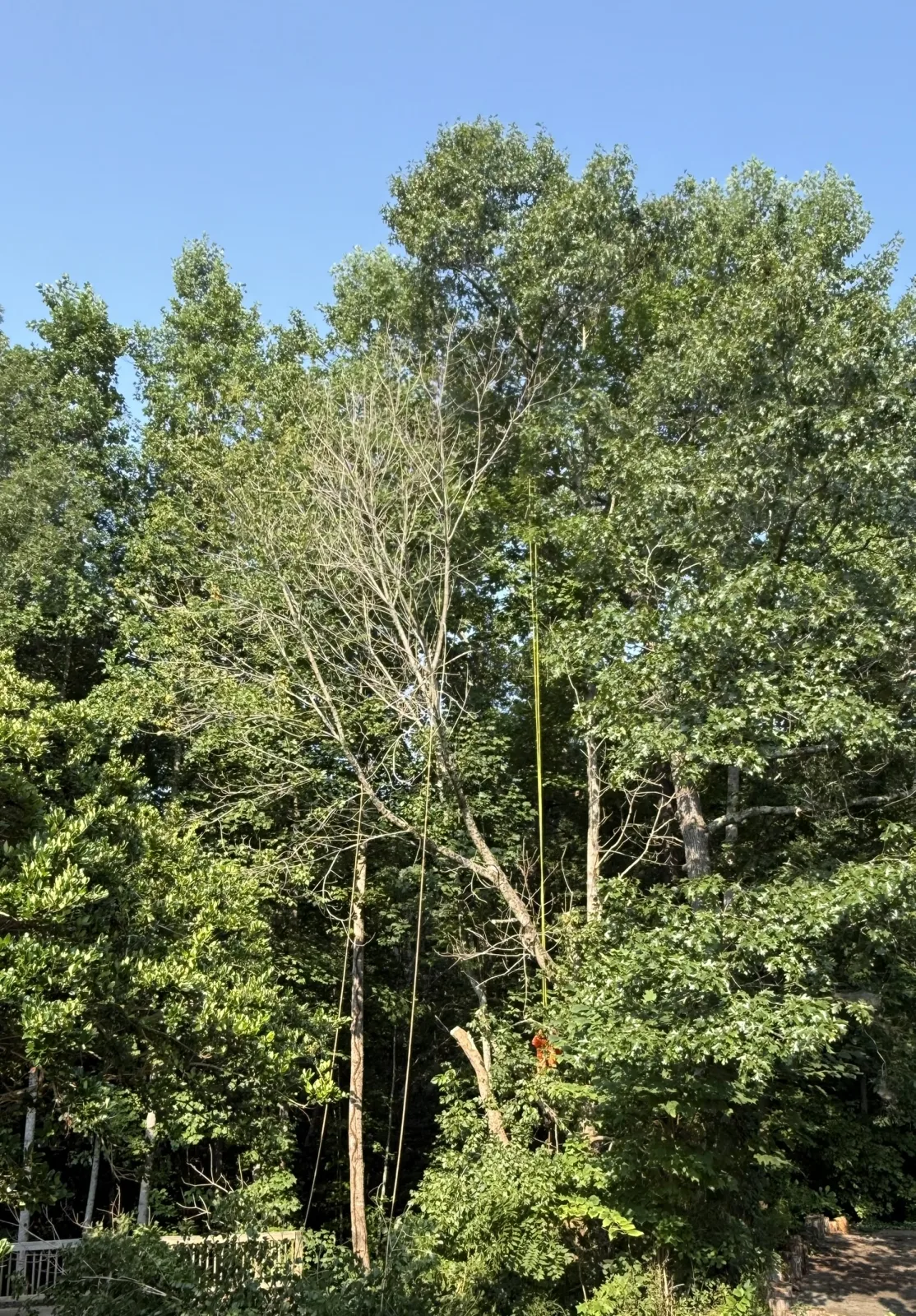
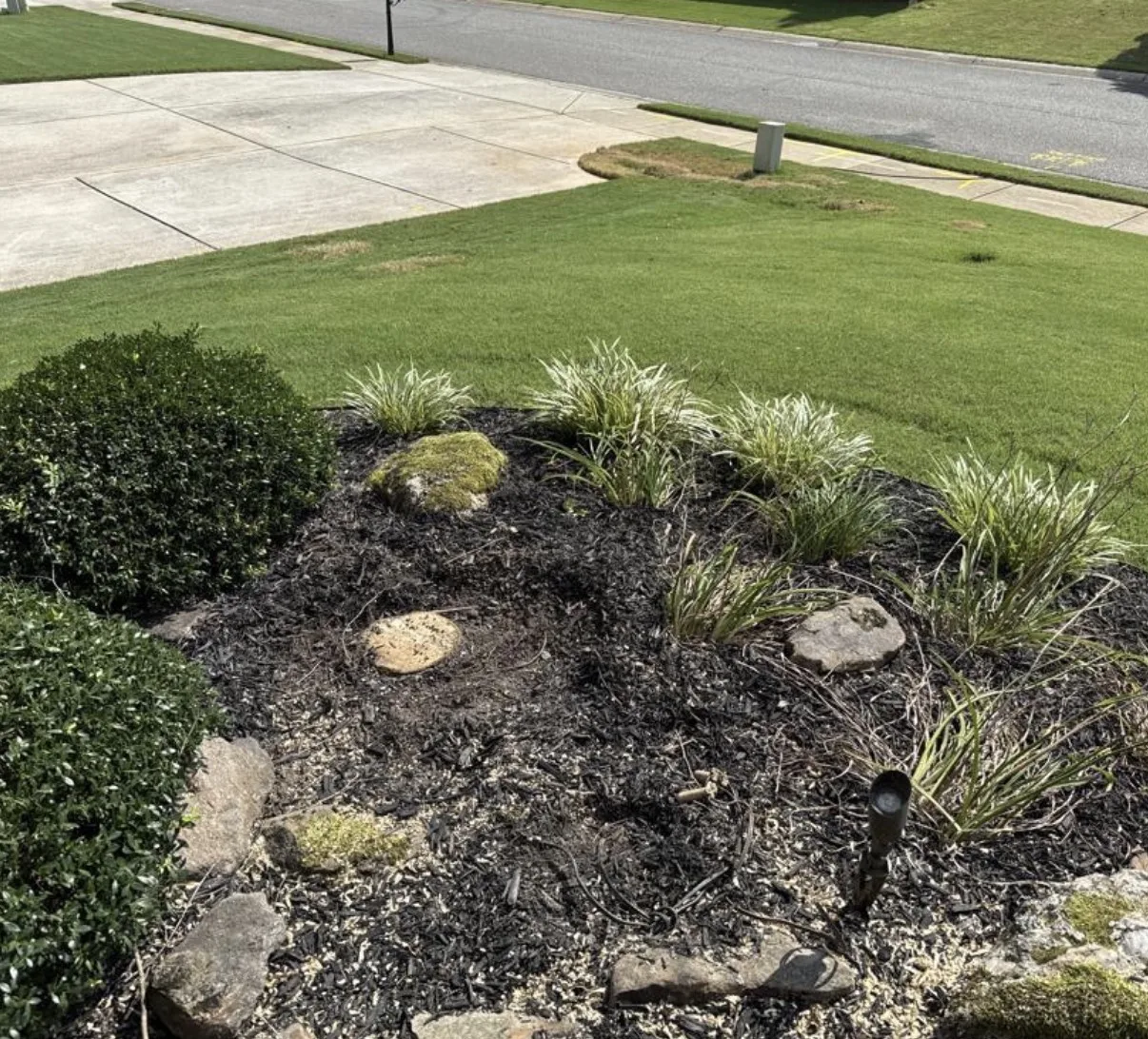
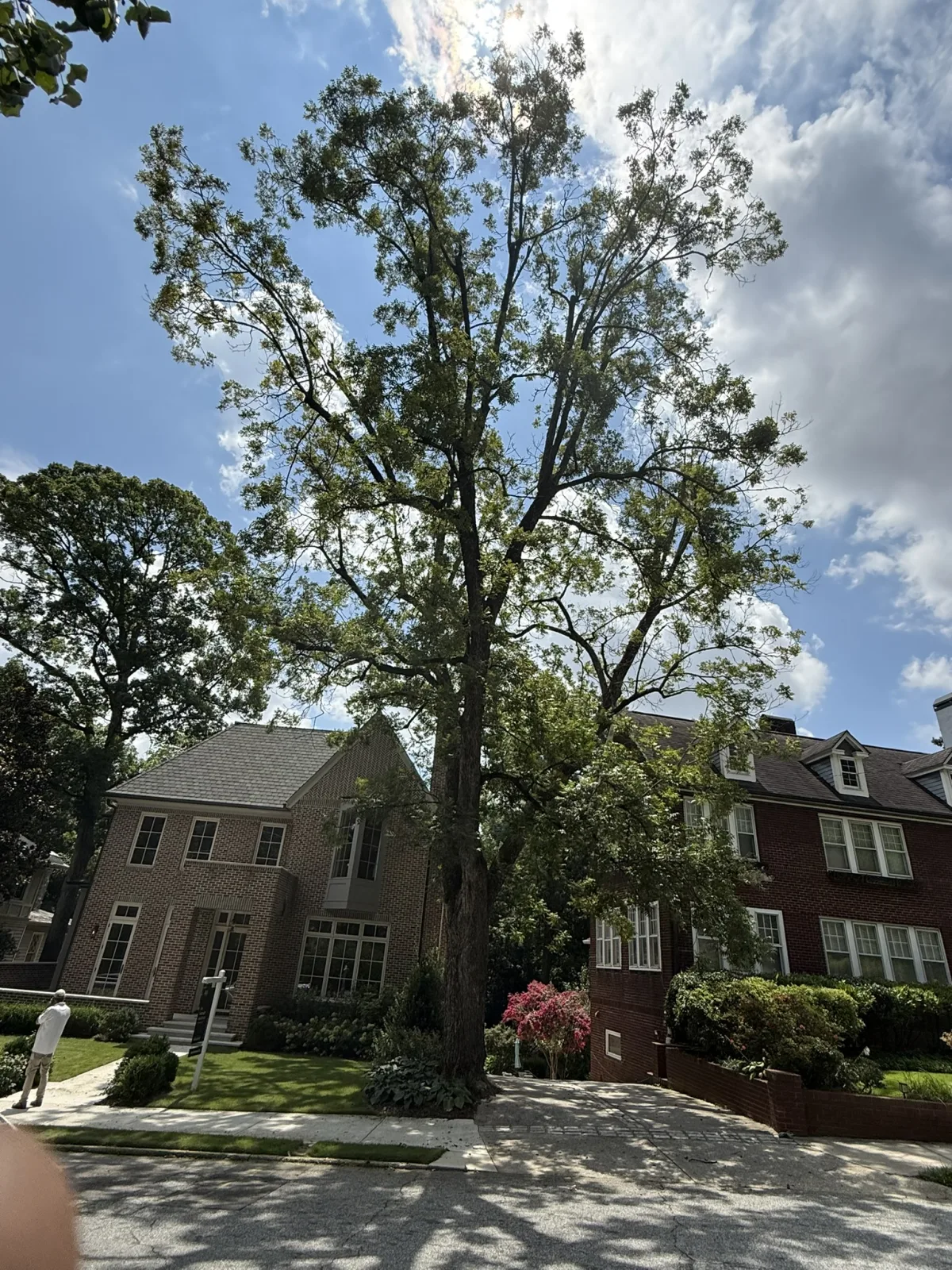
Field Portfolio: Verified Tree Care Operations
Real-world documentation of low-impact removals, structural pruning, and subterranean stump grinding
North Georgia Arboricultural Field Dossiers: The Supreme Arbor Knowledge Network
Forensic guides, municipal legal analysis, mechanical field reports, and regional operational hubs
Municipal Operational Hubs
Dedicated regional dossiers detailing local equipment access, response corridors, and municipal ordinance filings:
Georgia Property Rights & Insurance Law
Investigative legal briefs on boundary line liability, insurance claim rules, and tree contractor vetting:
Technical Rigging, Decay & Root Mechanics
Engineering analyses of friction rigging, subterranean stump pulverization, and Piedmont clay soil physics:
- Tight Space Aerial Rigging & Mechanical Lowering →
- Hidden Tree Decay & Structural Failure Diagnostics →
- Yard-Safe Tree Removal: Protecting Georgia Clay Soils →
- Post-Tree Removal Cleanup: The Weekend-Ready Standard →
- Georgia Tree Removal Cost & Pricing Factors Guide →
- Stump Grinding Costs & Pricing in Georgia →
- Stump Grinding Depth, Root Systems & Yard Prep →
- DIY Stump Grinder Rental vs. Professional Grinding →
Supreme Arbor maintains rigorous compliance with local, county, and state standards across North Georgia tree operations:
Frequently Asked Questions
Straight answers to common questions about tree removal, costs, safety, and equipment
What geographic areas does Supreme Arbor serve in Georgia?
Supreme Arbor primarily serves homeowners and commercial properties across Cherokee County (Woodstock, Canton, Holly Springs, Ball Ground), Cobb County (Marietta, Kennesaw, Acworth, Smyrna, East Cobb, Vinings), and Forsyth County (Cumming, South Forsyth), as well as the broader North Metro Atlanta corridor.
How does Supreme Arbor protect surrounding structures and property during tree removal?
Our low-impact extraction methods prioritize site safety, utilizing established access pathways, controlled staging areas, and precision friction rigging to safely lower heavy limbs. For complex or hazardous trees, arranged mobile cranes lift heavy wood vertically away from structures, eliminating falling impact risks.
How much does professional tree removal cost in North Georgia?
Tree removal costs vary depending on trunk diameter (DBH), total tree height, proximity to structures, site access constraints, required rigging equipment, and stump grinding depth. Supreme Arbor provides free, transparent written estimates after an on-site property evaluation, detailing all equipment and labor costs with no hidden fees.
Can Supreme Arbor help with homeowners insurance claims after storm damage?
Yes. If a storm causes a tree to fall on your house, garage, or fence, Supreme Arbor coordinates emergency extraction, safely removes the hazard to prevent further structural damage, and supplies detailed documentation and photos required by insurance adjusters.
What is the difference between an arborist and a general tree lopper?
Professional arborists follow strict ANSI A300 standards and understand tree biology, risk assessment, and proper structural pruning, whereas unqualified tree services often perform improper topping or flush cuts that create disease vectors and structural failure. Supreme Arbor does not employ a Certified Arborist; the company is an active member of the Georgia Arborist Association and works with independent ISA Certified Arborists when a project requires certified evaluation or reporting, ensuring full compliance, long-term canopy health, and proper documentation.
Does Supreme Arbor provide crane-assisted tree removal?
Yes. Supreme Arbor can coordinate specialized equipment when appropriate, including crane-assisted tree removal. Crane use depends on the tree, site access, surrounding structures and overall project requirements.
What options are available for wood chips, logs, and debris?
Options include hauling away the wood and debris, leaving wood chips on the property, or cutting suitable wood for firewood. Other options include grinding the stump. Available options and any related costs will be discussed and included in the project estimate.
How deep does Supreme Arbor grind tree stumps, and how is underground utility safety verified?
Supreme Arbor grinds stumps 6 to 12 inches below grade, completely pulverizing the root flare to eliminate termite breeding grounds. In full compliance with the Georgia 811 Dig Law (O.C.G.A. § 25-9-1), underground utility lines are marked prior to excavation to prevent utility strikes.