
Canton & Cherokee County Homeowner Vetting Guide
How to Choose a Tree Service in Canton, GA: A Homeowner Checklist
Before you authorize tree removal, crane-assisted dismantling, or canopy pruning in Canton or Cherokee County, verify who is stepping onto your property. Use this practical checklist to verify liability insurance, check arborist credentials, navigate City of Canton and HOA regulations, and protect your home.
The essentials before you hire in Canton
- Define your project scope: Clarify whether you need physical tree cutting, deadwood pruning, subterranean stump grinding, or an independent certified arborist evaluation for an HOA architectural review or municipal permit.
- Verify credentials per individual: ISA credentials belong to specific individuals, not whole companies or truck decals. Verify the evaluator’s name directly in the ISA directory.
- Demand itemized written proposals: Ensure the scope explicitly details debris removal (hauling wood chips vs. leaving mulch), wood processing, and stump grinding depth.
- Verify insurance through the broker: Request a Certificate of Insurance (COI) sent directly from the contractor’s insurance agency naming you as the certificate holder with reputable liability limits (Supreme Arbor carries $2 million in Commercial General Liability Insurance).
- Check local jurisdiction rules: Permitting requirements differ sharply between the incorporated City of Canton, unincorporated Cherokee County, and private HOA communities such as BridgeMill and Great Sky.
- Coordinate underground utility locates: Call Georgia 811 at least three business days before mechanical stump grinding to protect buried utility infrastructure across Cherokee County.
1. Identify the help you actually need
Before scheduling on-site estimates in Canton, clarify whether you need physical tree cutting, an assessment of visible decay, or an independent certified arborist report for your HOA or municipal planning department. Tree care across Cherokee County spans two distinct trades:
Production Tree Care Crews: These contractors operate chainsaws, friction rigging blocks, heavy brush chippers, and coordinated crane equipment. They specialize in the physical dismantling of hazardous trees, structural canopy pruning, storm cleanup, and stump grinding.
Consulting Arborists: These professionals focus on diagnostic pathology, tree risk assessments (TRAQ), decay quantification, and formal written reports for permitting authorities or property boundary disputes.
If you have dead pines leaning toward a driveway or house near Lake Allatoona or River Green, you need an experienced, insured production crew. If you need a formal hazard letter to satisfy a municipal building official or an HOA architectural board, you need a certified arborist assessment. Supreme Arbor performs professional tree removal in Canton, GA, precision structural pruning, and stump grinding, and engages independent ISA Certified Arborists whenever a project requires formal certified reporting.
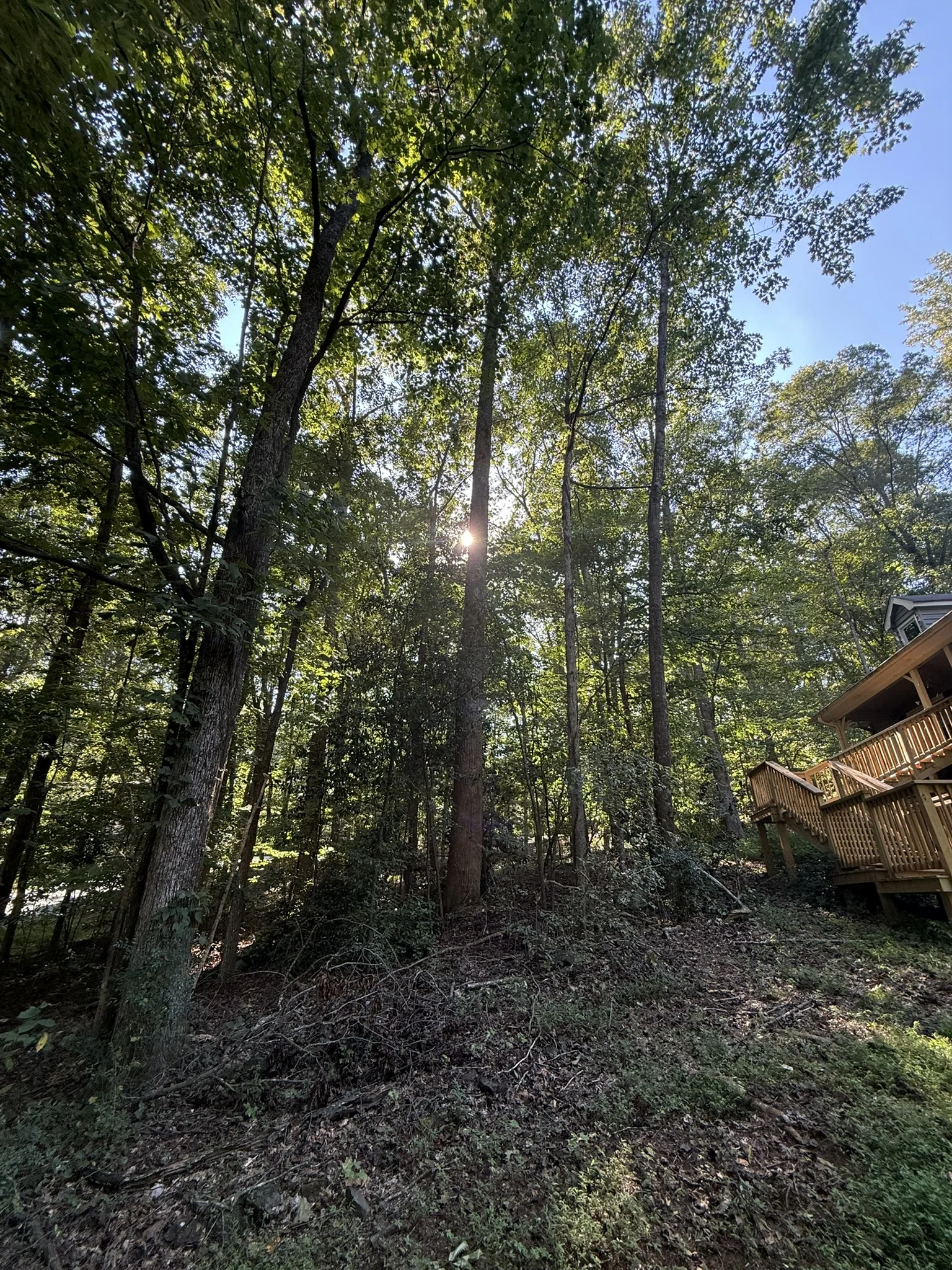
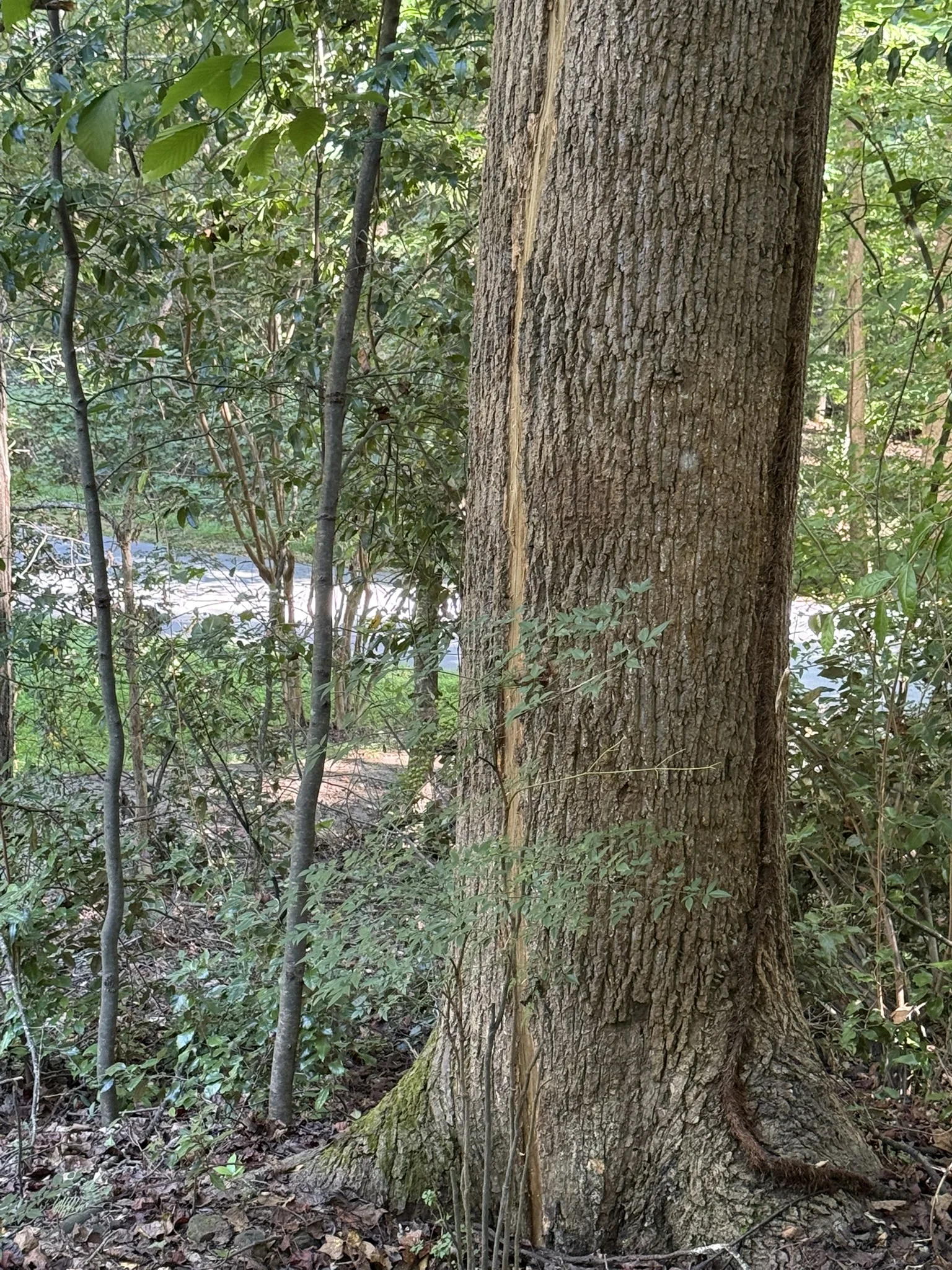
Take dated photographs of the tree and nearby targets (such as rooflines, decks, or fences) from safe ground-level locations. Never climb a tree or approach an unstable trunk to gather measurements.
2. Understand and verify arborist credentials
In Georgia, the tree-care trade is not licensed by a state contractor board. Anyone with a chainsaw and a truck can legally advertise tree removal in Cherokee County. For this reason, professional credentials and verified insurance are your primary safeguards.
The International Society of Arboriculture (ISA) awards credentials to individuals who pass rigorous examinations in tree biology, diagnosis, soil science, and safe work practices. A company cannot be certified by the ISA; only the individual practitioner holds that credential. A logo on a truck does not mean the person operating the equipment is certified.
When your project requires a formal tree condition assessment or permit report, ask for the evaluator’s full name and verify their current status through the ISA Credential Verification Directory. Because directory participation is voluntary, an arborist may hold an active credential without appearing publicly. If a name does not appear, ask the arborist for their certification number and confirm it directly with the ISA.
Look for additional indicators of professional commitment, including Tree Risk Assessment Qualification (TRAQ), Tree Care Industry Association (TCIA) membership, and state-level engagement. For example, Iruku Makanga, owner of Supreme Arbor, is an individual member of the Georgia Arborist Association (GAA). Supreme Arbor does not employ a Certified Arborist on staff; when a Canton homeowner requires a certified assessment or written permit report, Supreme Arbor engages independent ISA Certified Arborists.
3. Know Canton and Cherokee County municipal rules for your property
Tree ordinances across the Canton area depend strictly on your property’s legal jurisdiction. Requirements vary significantly between incorporated City of Canton limits, unincorporated Cherokee County acreage, and private HOA communities:
Georgia State Licensing Reality
The Georgia Attorney General’s consumer protection office notes that tree-removal services are not required to hold a Georgia state contractor license. Because there is no state licensing board for tree cutters, homeowners in Canton must independently verify insurance coverage, customer references, and local business standing.
City of Canton Municipal Regulations: If your property is located within the incorporated city limits of Canton, tree regulations are administered through Canton City Hall (Community Development and Planning departments). While routine maintenance and dead or hazardous tree removal on established single-family residential lots generally do not require a separate permit, commercial properties, subdivisions undergoing land disturbance, and protected tree canopy replacement are governed under municipal development codes. When uncertain, verifying parcel jurisdiction with Canton City Hall avoids municipal code disputes.
Unincorporated Cherokee County: Outside Canton city limits (including large unincorporated residential communities across Hickory Flat, Sixes Road, and Lathemtown), Cherokee County does not require tree removal permits for single-family residential homeowners removing dead, diseased, or hazardous trees on their private lots outside protected stream buffers. Review our comprehensive breakdown of Cherokee County tree removal laws.
Etowah River and State Waters Riparian Buffers: Canton is bisected by the Etowah River basin and its tributary streams. Under the Georgia Erosion and Sedimentation Act (O.C.G.A. § 12-7-1), Georgia establishes a mandatory 25-foot natural vegetated buffer along state waters (and 50-foot buffers along designated trout streams). Tree removal, mechanical clearing, or root disturbance within this state waters buffer is restricted by Georgia Environmental Protection Division (EPD) regulations. Homeowners bordering creeks or the Etowah River must verify buffer boundaries before authorizing mechanical work.
HOA and Subdivision Covenants: Premier master-planned subdivisions in Canton (including BridgeMill, Great Sky, River Green, Carmichael Farms, and Soleil Laurel Canyon) enforce recorded Architectural Review Committee (ARC) covenants. Many Canton HOAs require written architectural review applications, photographic evidence, or a tree-care assessment before living canopy trees can be removed. Always consult your specific subdivision bylaws before scheduling tree removals.
Georgia Boundary Line Tree Laws: When trees grow along property lines between neighbors, ownership and liability are governed by Georgia common law (including Willis v. Maloof and Cannon v. Fedosky). Generally, a property owner may prune encroaching branches up to the boundary line, provided the pruning does not kill the tree. For hazardous boundary trees, Georgia law examines whether the tree owner had actual or constructive notice of visible dead wood or structural defects prior to failure.
4. Compare written estimates and work scopes
Never compare tree service estimates on price alone. A low bid often omits crucial scope items such as subterranean stump grinding, turf protection, or complete brush haul-away. When evaluating proposals for tree work in Canton, verify that the written estimate clearly documents:
- Business Identity: Legal business name, verifiable local address, and responsive contact phone number.
- Specific Tree Identification: Clearly marked trees, specific branches, and designated work areas.
- Work Methods and Machinery: Whether the crew will use low-impact friction rigging, compact track loaders, aerial lifts, or coordinated mobile crane equipment.
- Yard and Access Considerations: Specified travel routes for equipment, fence gate clearance, and protection mats for turf and concrete driveways, especially on steep Cherokee County slopes.
- Wood and Debris Management: Clear agreement on whether wood and brush will be hauled away, wood chips left on-site for garden mulch, or logs bucked into firewood rounds.
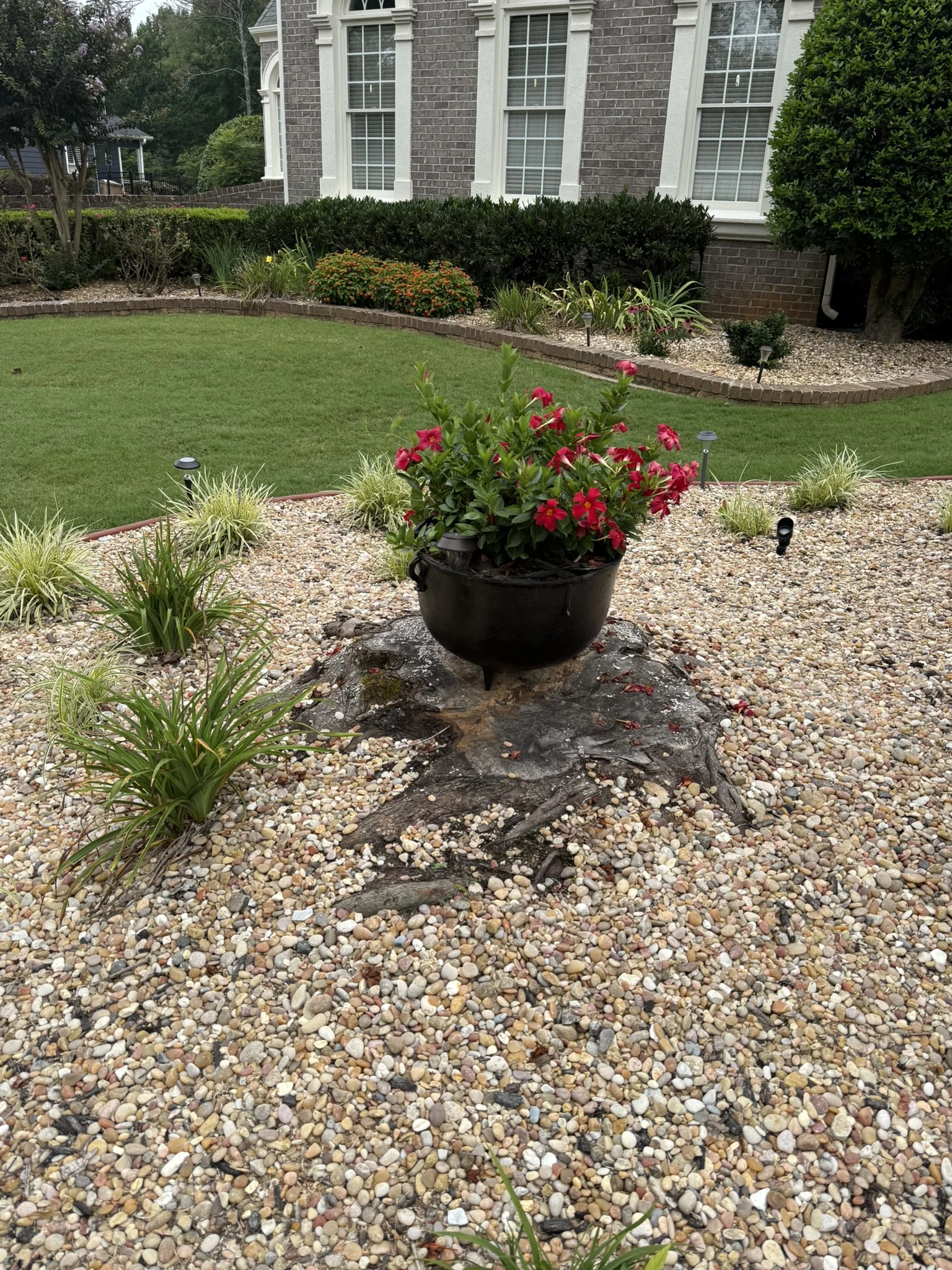
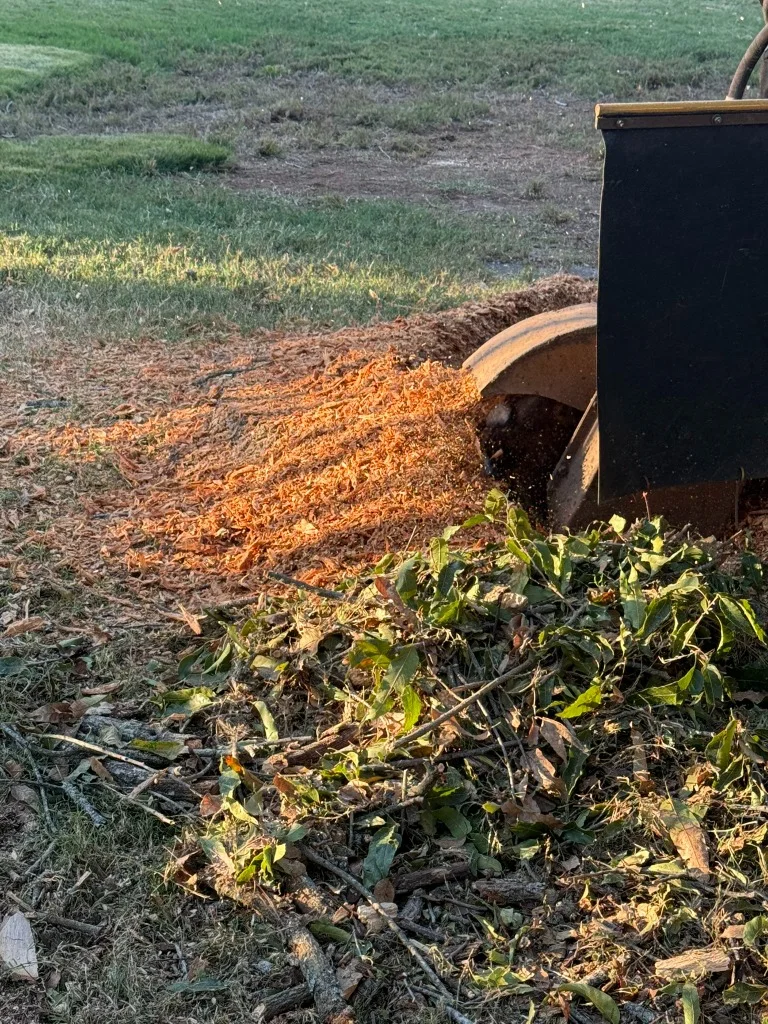
- Stump Grinding Depth: Clarification on whether stump grinding is included, specifying grinding 6 to 12 inches below grade and pulverizing primary root flares.
- Total Project Pricing: Total cost, itemized sales tax (if applicable), deposit terms, and payment milestones. Avoid paying in full upfront before all timber and debris are cleared.
5. Review insurance information carefully
Always request a current Certificate of Insurance (COI) sent directly from the contractor’s insurance broker to your email address. A photocopy carried in a truck cab may be outdated, altered, or canceled.
The Georgia Office of Commissioner of Insurance notes that a Certificate of Insurance is an informational summary of policy coverage at the time of issuance. It is not an insurance policy and cannot alter or expand coverage terms. Confirm that the policy lists Commercial General Liability coverage with reputable occurrence limits (Supreme Arbor carries $2 million in Commercial General Liability Insurance under active commercial underwriting).
In addition, verify that the crew is covered by active Worker’s Compensation insurance. Tree work aloft involves significant physical risk; if an uninsured worker is injured on your property, property owners may face exposure under Georgia worker’s compensation and premises liability laws.
Under Georgia common law (including Willis v. Maloof), generally speaking, unless there is damage to a covered structure, there is no coverage for preventative tree removal simply because a tree is dead, dying, or leaning. Standard homeowner policies respond only after an actual failure causes physical structural damage to a covered dwelling or building. Read our comprehensive Georgia tree service insurance and property liability guide for complete details.
6. Ask about work planning and safety
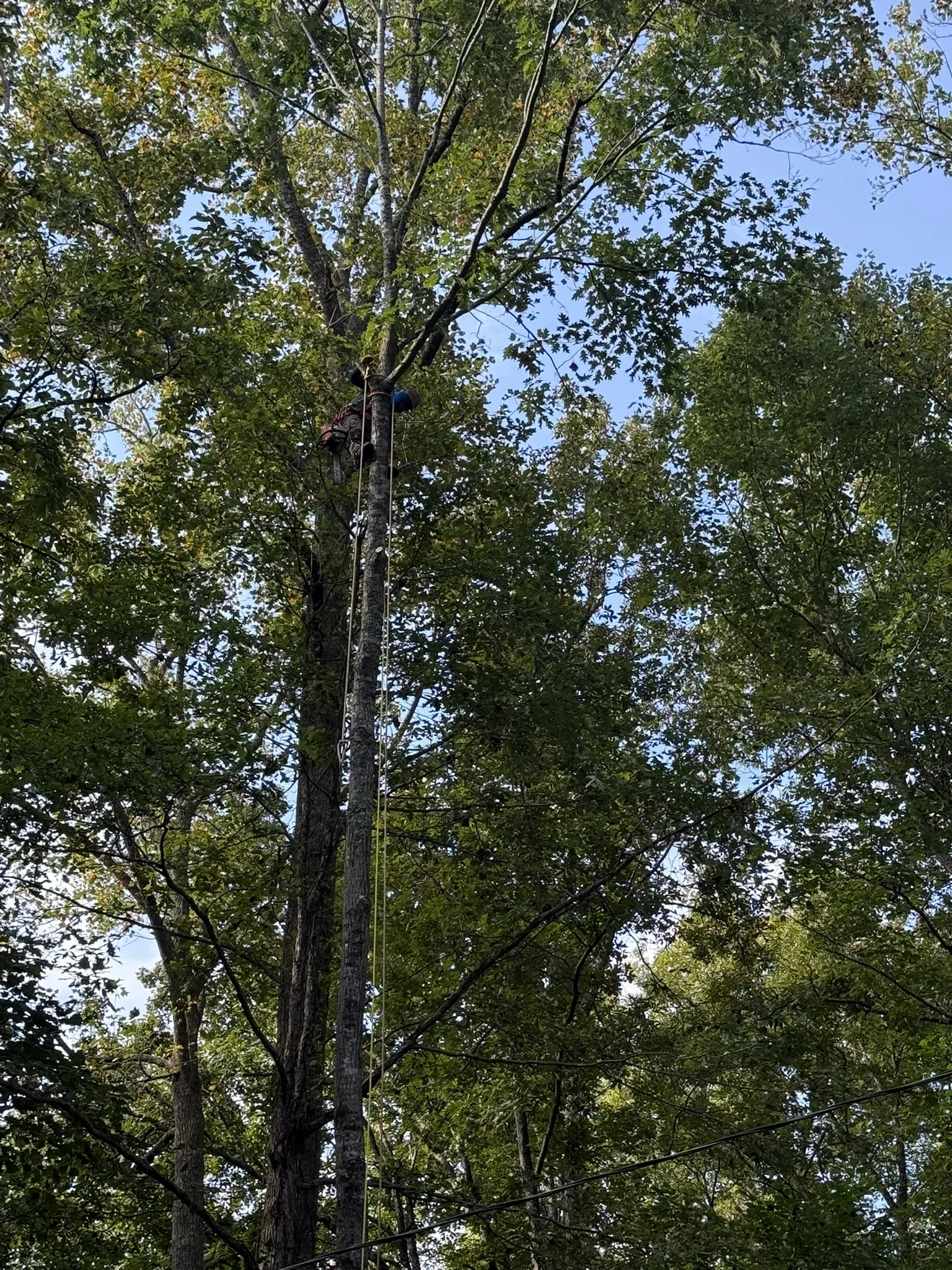
Residential tree removal in Canton neighborhoods requires strict operational safety. Heavy timber must often be dismantled on steep hillside terrain near Lake Allatoona ridges or in tight drop zones directly above rooflines, fences, and air conditioning units.
- Supervision: Who will be on-site managing the crew and directing rigging operations?
- Lowering Mechanics: How will heavy limb and trunk wood be controlled? Professional crews deploy high-directional rigging blocks, friction bollards, and shock-absorbing rigging lines to control timber and lower heavy sections safely.
- Property Precautions: What steps should homeowners take before work begins regarding moving vehicles, unlocking gates, and keeping children and pets indoors?
- Safety Standards: Does the crew follow ANSI Z133 safety requirements for arboricultural operations?
OSHA identifies ANSI Z133 (Safety Requirements for Arboricultural Operations) as the recognized national consensus safety standard for tree care. While ANSI Z133 is an industry safety standard rather than a government license, adherence to its helmet, eye protection, chainsaw operation, and drop-zone safety protocols separates professional contractors from careless operators.
7. Describe tree concerns without self-diagnosing
Canton homeowners often spot early warning signs of structural instability in mature oaks, hickory, and loblolly pines. When inspecting your property, make note of visible changes:
- Large dead limbs or broken hangers caught in the upper canopy.
- Deep vertical trunk cracks, bark splits, or hollow cavities.
- Wood decay indicators or bracket fungi (such as Ganoderma, Inonotus, or Armillaria) growing from the root flare or lower trunk, signaling internal heartwood decay.
- Signs of insect infestation, including pine bark beetle pitch tubes or fine sawdust frass at trunk bases.
- Sudden changes in trunk lean accompanied by soil mounding or cracked soil on the opposite root plate, particularly after heavy rainfall on Cherokee County slopes.
Document what you see with dated photos, but avoid guessing the internal strength of the wood. Consult an appropriately qualified professional for a physical evaluation. Additionally, beware of contractors who suggest “tree topping” (cutting off the upper canopy crown). The ISA explicitly warns that topping mutilates tree architecture, stimulates weakly attached replacement shoots, and accelerates wood rot.
8. Check underground utilities before digging
When tree work in Canton involves excavation or mechanized stump grinding, Georgia law (O.C.G.A. § 25-9-1) mandates that a utility locate request be submitted to Georgia 811 at least three business days before excavation begins.
Georgia 811 coordinates with participating public utility operators across Cherokee County to mark buried gas mains, electric cables, telecommunication conduits, and municipal water lines. However, public utility locates do not mark private lines (such as homeowner irrigation pipes, low-voltage outdoor yard lighting, invisible pet fences, or private septic lines). Homeowners should identify and disclose any private lines to the crew before mechanical grinding starts.
Learn more about submission timelines and paint markings through the official Georgia 811 process guide.
9. Recognize contractor warning signs
Following severe storms in Canton and Cherokee County, predatory door-to-door operators frequently travel through damaged neighborhoods. The Georgia Attorney General advises homeowners to watch for common warning signs:
- High-Pressure Sales Tactics: Demanding an immediate signature before you have reviewed the contract terms.
- Unsolicited Storm Solicitations: Unmarked trucks showing up immediately following severe weather offering “today-only” cash rates.
- Large Upfront Cash Demands: Insisting on full payment before equipment is staged or work commences.
- Deductible Waivers: Offering to “pay your homeowners deductible,” which constitutes unlawful insurance fraud under Georgia law.
- Lack of Verifiable Credentials: Refusing to provide an official Certificate of Insurance sent directly from their broker.
Protect your investment by verifying references, checking business standing, and consulting your insurance adjuster before signing repair agreements.
10. Canton homeowner checklist before authorizing tree work
Review these practical questions before signing any tree service agreement in Canton or Cherokee County:
- Have I identified the specific trees, safety concerns, and work scope requested?
- Do I understand whether I need physical production tree removal, pruning, or a formal certified arborist report?
- If an arborist credential is required, have I verified the evaluator’s name in the ISA credential directory?
- Have I confirmed my property’s jurisdiction (City of Canton vs Unincorporated Cherokee County) and checked HOA rules (such as BridgeMill or Great Sky)?
- Does the written estimate specify equipment access routes, yard protection, and debris handling?
- Are wood hauling, chipping, and stump grinding depths (6 to 12 inches below grade) clearly itemized?
- Have I received an official Certificate of Insurance sent directly from the contractor’s insurance broker?
- Are the total project cost, milestone payments, and change-order procedures documented in writing?
- Has Georgia 811 been contacted at least three business days before scheduled stump grinding?
- Have private underground facilities (such as irrigation and pet fences) been marked or pointed out?
Frequently asked questions
Do I need a permit to remove a tree on my property in Canton, GA?
On existing single-family residential lots in Canton, routine maintenance and hazardous tree removals generally do not require a separate municipal permit. However, if your property is undergoing commercial development, major land disturbance, or is subject to City of Canton Chapter 106 tree preservation standards, permits may be required. In unincorporated Cherokee County, single-family residential tree removals outside stream buffers do not require permits. Always check your specific HOA covenants before removing trees.
Do BridgeMill and Great Sky HOAs require tree removal approval?
Yes. Most master-planned communities in Canton, including BridgeMill, Great Sky, River Green, and Carmichael Farms, enforce recorded Architectural Review Committee (ARC) guidelines. These covenants often require submitting an architectural request form with photographs before cutting down living canopy trees visible from common areas or streets.
Can I remove trees near the Etowah River or local creeks in Canton?
Tree work adjacent to state waters is subject to Georgia Environmental Protection Division (EPD) buffer rules under O.C.G.A. § 12-7-1. Georgia establishes a mandatory 25-foot vegetated buffer along state waters and a 50-foot buffer along designated trout streams. Land disturbance and cutting inside these protected riparian zones require special variances or environmental reviews.
What insurance should a tree service carry in Canton, GA?
A reputable tree service must carry Commercial General Liability insurance (Supreme Arbor carries $2 million in Commercial General Liability coverage) and active Worker’s Compensation insurance for all crew members. Always request a Certificate of Insurance sent directly from the contractor’s insurance broker to your email address.
Does Supreme Arbor employ an in-house Certified Arborist?
Supreme Arbor does not employ a Certified Arborist on staff. When a Canton homeowner requires a formal tree condition assessment, tree risk assessment (TRAQ), or certified report for an HOA or municipal permit, Supreme Arbor engages independent ISA Certified Arborists.
Is the owner of Supreme Arbor affiliated with professional arborist organizations?
Yes. Iruku Makanga, owner of Supreme Arbor, is an individual member of the Georgia Arborist Association (GAA).
Are wood haul-away and stump grinding automatically included in an estimate?
Not always. In the tree-care industry, tree removal, brush chipping, wood haul-away, and subterranean stump grinding are distinct operational tasks. Supreme Arbor clarifies all debris handling options and any related costs in the written estimate.
When must Georgia 811 be contacted for tree work in Canton?
Whenever tree work involves mechanized ground disturbance, including stump grinding. Under Georgia law (O.C.G.A. § 25-9-1), a utility locate ticket must be submitted at least three business days before excavation so public utility lines can be marked. Homeowners should separately mark private irrigation lines, outdoor lighting wire, or pet fences.
Official sources and further reading
The following organizations publish authoritative consumer protection, municipal planning, and arboricultural standards referenced in this guide:
- City of Canton Community Development: Municipal planning, building inspections, and code administration for Canton, GA.
- Cherokee County Government: Development regulations, engineering, and environmental health standards for unincorporated Cherokee County.
- Georgia Environmental Protection Division (EPD): Riparian buffer rules and state waters protection under O.C.G.A. § 12-7-1.
- Georgia Office of the Attorney General: Consumer alert on storm-related contractor scams and tree-removal licensing.
- International Society of Arboriculture (ISA): Verify an ISA credentialed arborist and Why topping hurts trees.
- Georgia 811: The Georgia 811 process and utility marking standards under O.C.G.A. § 25-9-1.
- Georgia Forestry Commission (GFC): Urban forestry and tree-care guidelines.
- Georgia Office of Commissioner of Insurance: Bulletin 24-EX-4: Certificates of Insurance guidance.
- Occupational Safety and Health Administration (OSHA): Tree-care industry standards (ANSI Z133).
- Georgia Arborist Association: Iruku Makanga individual GAA member profile.
Company information and standards
Supreme Arbor, LLC carries $2 million in Commercial General Liability Insurance. Supreme Arbor does not employ a Certified Arborist; when certified evaluation or reporting is required, Supreme Arbor engages independent ISA Certified Arborists.
Iruku Makanga is an individual member of the Georgia Arborist Association (GAA). For transparent project estimates in Canton and Cherokee County, call (470) 863-3083 or visit our Canton tree removal service page.