
Georgia Homeowner Guide
How to Choose a Tree Service in Georgia
A practical guide to comparing tree-service proposals, reviewing insurance documents, understanding professional credentials, and asking useful questions before work begins.
Important points for homeowners
- Georgia does not require tree-removal services to hold a state contractor licence. Local rules or project-specific permits may still need to be checked.
- Ask for a written scope of work and a current Certificate of Insurance. A certificate summarizes policy information; it does not change the policy or guarantee a claim will be paid.
- An ISA Certified Arborist credential belongs to an individual. Verify the person’s current credential rather than assuming that a company or every member of its crew is certified.
- Supreme Arbor carries $2 million in Commercial General Liability Insurance.
1. Start with the work you need
Before contacting contractors, describe the work you want considered. The project may involve removing a tree, pruning selected branches, grinding a stump, or addressing a tree that has been damaged. These are different scopes of work and may require different equipment, planning, and qualifications.
Identify the tree or work area, nearby buildings and other features, access limitations, visible concerns, and the result you are requesting. Do not climb the tree or attempt hazardous cutting to gather information. Photographs taken from a safe location can help explain what you are seeing, but a photograph alone cannot establish a tree’s internal condition or risk.
For a tree that may require a professional assessment rather than immediate removal, ask who will evaluate its condition and what qualifications that person holds. The International Society of Arboriculture (ISA) provides consumer information about when an arborist may be useful and how to locate an ISA-credentialed professional.
2. Warning signs when comparing contractors
Georgia’s Attorney General advises consumers to be cautious when hiring contractors after severe weather and identifies practices such as pressure to decide immediately, cash-only demands, and requests for full payment before the agreed work as reasons to take extra care. These are warning signs to investigate; no single sign automatically proves that a contractor is fraudulent.
- Pressure to sign immediately. Take time to read the estimate, ask questions, and compare proposals when circumstances allow.
- Unsolicited door-to-door offers after a storm. Georgia consumer guidance recommends avoiding door-to-door home-repair offers and seeking referrals instead.
- Full payment requested before the work begins. Ask for the payment schedule in writing and understand what each payment covers. Do not assume that every contractor uses the same deposit terms.
- Cash-only demands or unclear business identity. Confirm the contractor’s name and contact details, and keep written records of the proposal and communications.
- No written scope of work. Ask for a written description of the trees and work areas included, the work to be performed, debris handling, price, and payment terms.
- Vague or unverified insurance information. Request a current certificate and verify relevant details with the insurer or insurance agent.
- Unclear answers about who will perform the work. Ask who is responsible for the project, what experience is relevant, and who will be present to oversee the work.
- A recommendation to top a tree without explaining alternatives. ISA describes topping as a harmful pruning practice. Ask the contractor to explain the proposed pruning method and its alternatives.
Georgia’s Attorney General notes that tree-removal services are not required to be licensed by the state. Do not treat the absence of a Georgia state tree-removal licence as proof that a company is operating illegally. Ask whether any local registration, tree-protection approval, or project-specific permit applies to the particular property, and confirm local requirements with the relevant government office.
Read the Georgia Attorney General’s consumer alert about home-repair fraud after storms for the state’s consumer guidance.
3. Understand qualifications and arborist credentials
Tree removal, pruning, and tree assessment are related but distinct activities. A contractor may provide the physical tree work described in a proposal. A homeowner who needs an assessment or report should ask who will perform that evaluation, what qualifications the person holds, and what the report will cover.
An ISA Certified Arborist credential is held by an individual, not automatically by the company that employs or engages that person. Ask for the individual’s name and credential information, then use the ISA Find an Arborist directory to check an ISA credential. Directory participation is voluntary, so the directory should be used as a verification resource rather than as the only way to determine whether someone holds a credential.
Supreme Arbor does not employ a Certified Arborist. When certified evaluation or reporting is required, Supreme Arbor engages independent ISA Certified Arborists.
Iruku Makanga is an individual member of the Georgia Arborist Association (GAA). GAA membership is an association affiliation; it is not the same as ISA certification and should not be treated as a substitute for verifying an individual’s credential.
4. Compare written estimates and work scopes
Do not compare proposals on price alone. Two estimates may cover different work, equipment, disposal arrangements, or project conditions. Ask each contractor to describe the same requested scope so you can understand what is and is not included.
A written estimate or agreement should make the following points clear where they apply:
- The contractor’s legal business name and contact information.
- The property address and the specific tree or work area included.
- The work to be performed, including removal, pruning, or stump grinding where requested.
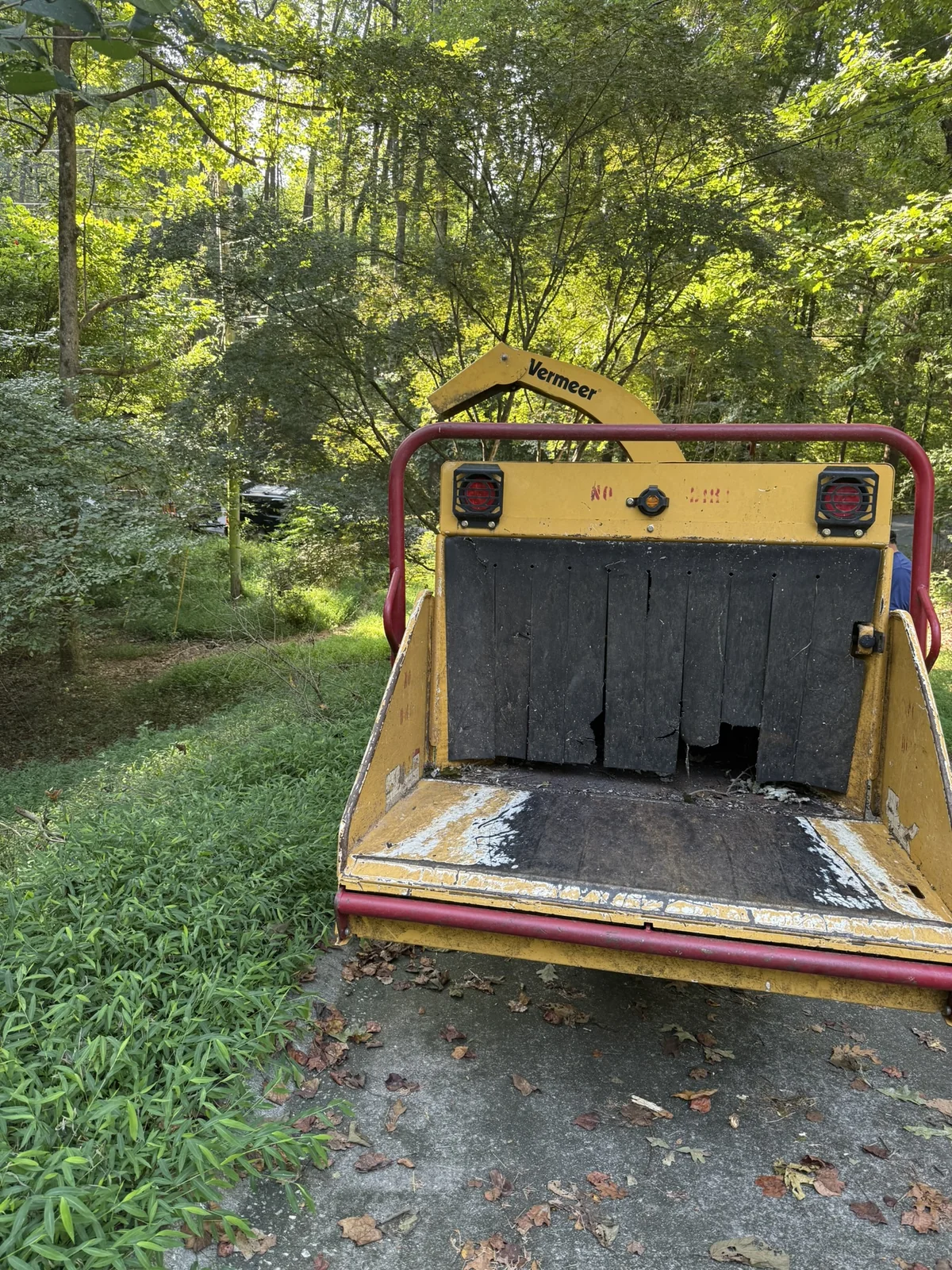
- Whether wood, logs, brush, and wood chips will be hauled away or left on the property, and any options or associated costs.
- Any specialized equipment that may be coordinated and any site-access requirements.
- The total price, payment schedule, and process for approving changes to the agreed scope.
- Any exclusions, homeowner responsibilities, or areas that are not included.
- How questions about incomplete work or possible property damage should be reported.
Read the agreement before signing. Ask the contractor to clarify any unclear item in writing. Payment terms vary by project and agreement; this guide does not establish a standard deposit amount or require every contractor to use the same payment schedule.
5. Review insurance documents carefully
Ask the contractor for a current Certificate of Insurance (COI) and review the named insured, insurer, policy type, stated limits, and effective dates. If you need clarification, use contact details you have independently confirmed to contact the insurer or insurance agent.
Georgia’s Office of Commissioner of Insurance explains that a Certificate of Insurance is an informational summary. It does not amend, extend, or alter the coverage, terms, exclusions, or conditions of the underlying policy. Being named as a certificate holder does not, by itself, make a homeowner an additional insured or create coverage that the policy does not provide.
If a contract requires additional-insured status or another specific protection, ask the insurer or agent to identify the applicable policy wording or endorsement. Do not rely on a certificate alone as a promise that a future claim will be accepted or paid.
Supreme Arbor’s insurance statement
Supreme Arbor carries $2 million in Commercial General Liability Insurance.
This company statement identifies the stated type and amount of coverage. It is not a guarantee that every type of incident or property loss is covered. Coverage depends on the policy terms, exclusions, endorsements, limits, and facts of a particular claim.
For more information, see the Georgia Insurance Commissioner’s Bulletin 23-EX-9 on Certificates of Insurance and Georgia Administrative Code Rule 120-2-103.
6. Ask about work planning and safety
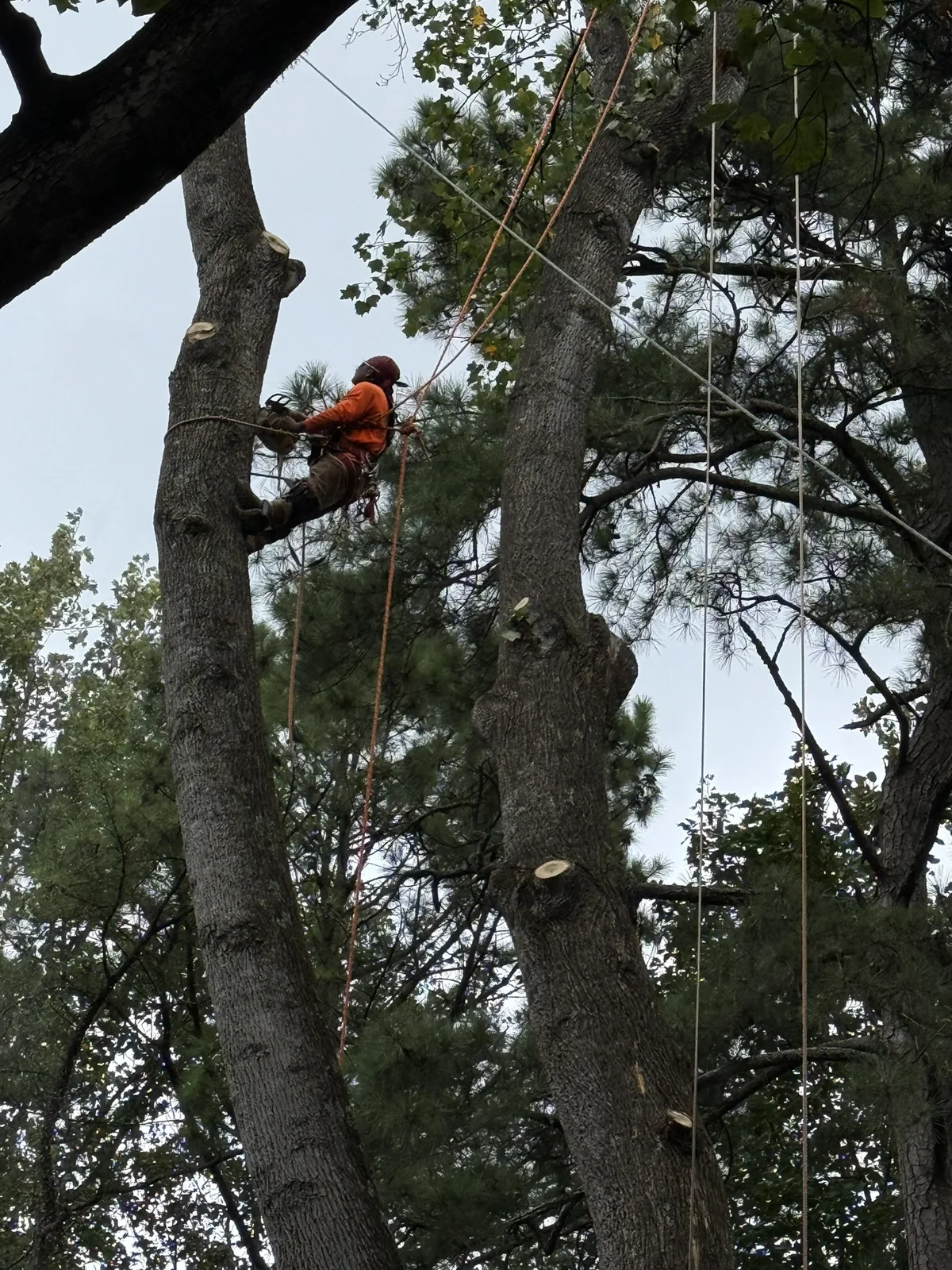
Tree work can involve elevated work, chainsaws, rigging, falling material, mobile equipment, and nearby structures or utilities. Ask the contractor to explain how the proposed work will be approached, who will be responsible for the site, and how the crew will account for the conditions around the tree.
Useful questions include:
- Who will be responsible for the work at the property?
- What equipment and work methods are being considered for this particular tree and site?
- How will the contractor account for nearby buildings, fences, vehicles, people, and utility lines?
- What work-area restrictions or homeowner preparations are needed?
- What safety practices and relevant training apply to the work being proposed?
OSHA lists ANSI Z133, Arboricultural Operations Safety, among voluntary national consensus standards that may be applicable to tree-care work. OSHA also explains that these consensus standards are not, by themselves, OSHA regulations, although some requirements may be adopted into OSHA standards. A contractor’s reference to ANSI Z133 should therefore not be described as a government licence or as proof of a particular certification.
See OSHA’s Tree Care Industry standards and guidance for the distinction between OSHA requirements and voluntary consensus standards.
7. When a tree’s condition is a concern
Homeowners may notice visible conditions such as large dead branches, cracks or splits, cavities, changes in lean, or disturbed soil near a tree. These observations can be reasons to seek a closer assessment, but no single sign or photograph can reliably determine whether a tree will fail or establish the cause of a defect.
Do not rely on a simple homeowner test, a fixed lean-angle threshold, or a photograph to diagnose the condition of an entire tree. Do not climb, cut, or approach a tree that appears unstable. If a tree or branch presents an immediate danger, keep people away and contact the appropriate emergency or utility service where necessary.
For questions about tree health or structural condition, ask for an evaluation by a suitably qualified tree-care professional. Where certified evaluation or reporting is required, confirm who will provide it and verify that individual’s current credential. ISA’s consumer guidance explains common visible tree defects and when to seek professional assessment.
See ISA’s Managing Hazards and Risk guidance for homeowner information.
8. Underground utilities and Georgia 811
If the proposed work involves mechanized digging or excavation, underground utilities must be addressed before work begins. Georgia 811 says to submit a locate request at least three business days before digging and to check the ticket responses before excavation starts.
Georgia 811’s participating utility members locate the public utility facilities they own or operate. Private systems, which may include private irrigation lines, landscape lighting, invisible pet fences, and other privately owned facilities, are not necessarily marked through the standard Georgia 811 process. Ask how private lines will be identified when they may be affected by the work.
Use the Georgia 811 process guide and Georgia 811 ticket-status and marking guidance. Do not begin mechanized digging until the applicable ticket responses and other requirements have been addressed.
9. Supreme Arbor’s company information
Supreme Arbor, LLC provides tree-care services. The following statements describe the company’s information supplied for this page:
- Supreme Arbor carries $2 million in Commercial General Liability Insurance.
- Supreme Arbor does not employ a Certified Arborist. When certified evaluation or reporting is required, Supreme Arbor engages independent ISA Certified Arborists.
- Iruku Makanga is an individual member of the Georgia Arborist Association (GAA).
Membership in the GAA should not be confused with an ISA credential. When an individual ISA credential is relevant to a project, verify the named individual’s credential directly through ISA.
To discuss a project scope or request an estimate, contact Supreme Arbor at (470) 863-3083 or use the contact page.
10. Homeowner contractor checklist
Use these questions when discussing a proposed tree project. The answers should relate to the specific property and written scope rather than a generic promise.
- What exact trees, branches, or work areas are included in the proposal?
- What work is proposed, and what alternatives were considered?
- Who will perform and oversee the work at the property?
- What equipment and work methods are being considered for this site?
- How will the work account for nearby structures, access, people, and utilities?
- What happens to the wood, logs, brush, and wood chips, and which options affect the price?
- What is the complete written price, payment schedule, and process for approving changes?
- Can you provide a current Certificate of Insurance, and can I verify relevant policy details with the insurer or agent?
- If certified evaluation or reporting is required, who will provide it, and how can I verify that person’s ISA credential?
- If digging or excavation is involved, who will address Georgia 811 and any private underground facilities?
Frequently asked questions
Are tree-removal companies required to have a Georgia state contractor licence?
Georgia’s Attorney General identifies tree-removal services as a category that is not required to be licensed by the state. This does not determine whether a local rule, tree-protection ordinance, permit, or other project-specific requirement applies. Check with the relevant city or county for the property involved.
How do I review a tree contractor’s Certificate of Insurance?
Review the named insured, insurer, policy type, stated limits, and effective dates. Contact the insurer or insurance agent using independently confirmed contact information. A Certificate of Insurance is a summary; it does not amend the policy, create additional-insured status by itself, or guarantee that a particular claim will be covered.
Does a $2 million insurance limit guarantee that damage will be paid?
No. A stated limit does not guarantee payment for a particular incident. Coverage depends on the policy terms, exclusions, endorsements, limits, and facts of the claim. Supreme Arbor carries $2 million in Commercial General Liability Insurance.
Does Supreme Arbor employ a Certified Arborist?
Supreme Arbor does not employ a Certified Arborist. When certified evaluation or reporting is required, Supreme Arbor engages independent ISA Certified Arborists.
Does Supreme Arbor provide crane-assisted tree removal?
Yes. Supreme Arbor can coordinate specialized equipment when appropriate, including crane-assisted tree removal. Crane use depends on the tree, site access, surrounding structures and overall project requirements.
What can be done with the wood chips and logs?
Options include hauling away the wood and debris, leaving wood chips on the property, or cutting suitable wood for firewood. Other options include grinding the stump. Available options and any related costs will be discussed and included in the project estimate.
Who locates underground utilities before stump grinding or excavation?
For mechanized digging or excavation, Georgia 811 provides the process for notifying participating public utility operators. Private facilities may not be marked through that process and may need separate identification. Check the ticket responses and address private lines before digging begins.
Can a photograph determine whether a tree is hazardous?
No. A photograph may show visible conditions, but it cannot reliably establish a tree’s internal condition, the cause of a defect, or the likelihood of failure. Arrange an appropriate in-person evaluation when there is a concern about tree condition or safety.
Sources and further reading
This guide uses public consumer, insurance, utility, workplace-safety, and arboricultural resources. These sources provide general information; they do not decide the facts of an individual project or legal dispute.
- Georgia Attorney General: Consumer Alert on Home-Repair Fraud Following Storms
- Georgia Office of Commissioner of Insurance: Bulletin 23-EX-9, Certificates of Insurance
- Georgia Administrative Code: Rule 120-2-103, Certificates of Insurance
- OSHA: Tree Care Industry Standards and Guidance
- International Society of Arboriculture: Find an ISA-Credentialed Arborist
- ISA: Managing Hazards and Risk
- ISA: Why Topping Hurts Trees
- Georgia Arborist Association: Iruku Makanga Individual Member Profile
- Georgia 811: The 811 Process
- Georgia 811: Utility Marking and Ticket Status
- University of Georgia Cooperative Extension: Tree Ownership and Responsibility
Educational information disclaimer
This page provides general homeowner information. It is not legal advice, insurance advice, a coverage opinion, a property survey, or an assessment of a particular tree. Georgia laws, local requirements, insurance policies, project conditions, and individual circumstances can differ. Confirm local requirements with the relevant government office, speak with your insurer about coverage, and consult a Georgia attorney about a specific legal dispute. For concerns about tree condition or safety, seek an appropriate in-person professional evaluation.