
Homeowner Information Guide
Georgia Tree Service Insurance and Property-Damage Guide
A practical guide to reviewing a tree contractor’s insurance certificate, documenting property damage, and understanding Georgia guidance on fallen trees and property-line situations.
Key points for homeowners
- Supreme Arbor carries $2 million in Commercial General Liability Insurance.
- A Certificate of Insurance summarizes policy information. It does not change the policy or guarantee that a particular claim will be covered.
- Responsibility for fallen trees, overhanging branches, and boundary-line trees depends on the facts and the applicable legal rules.
- Homeowners should contact their own insurer about coverage questions and a Georgia attorney about a specific property dispute.
1. Understanding Commercial General Liability Insurance
When selecting a contractor for residential or commercial tree removal services, homeowners may ask whether the contractor carries Commercial General Liability insurance. This insurance may respond to certain covered third-party bodily-injury or property-damage claims arising from business operations. The policy wording matters. Coverage depends on the facts of an incident, the type of claim, exclusions, endorsements, policy dates, and applicable limits.
A stated policy limit is not an automatic promise that an insurer will pay for every accident or repair. It is also not a guarantee that a homeowner’s particular loss will be covered. The policy language and the insurer’s coverage determination are important when a claim is reviewed.
Supreme Arbor’s insurance statement
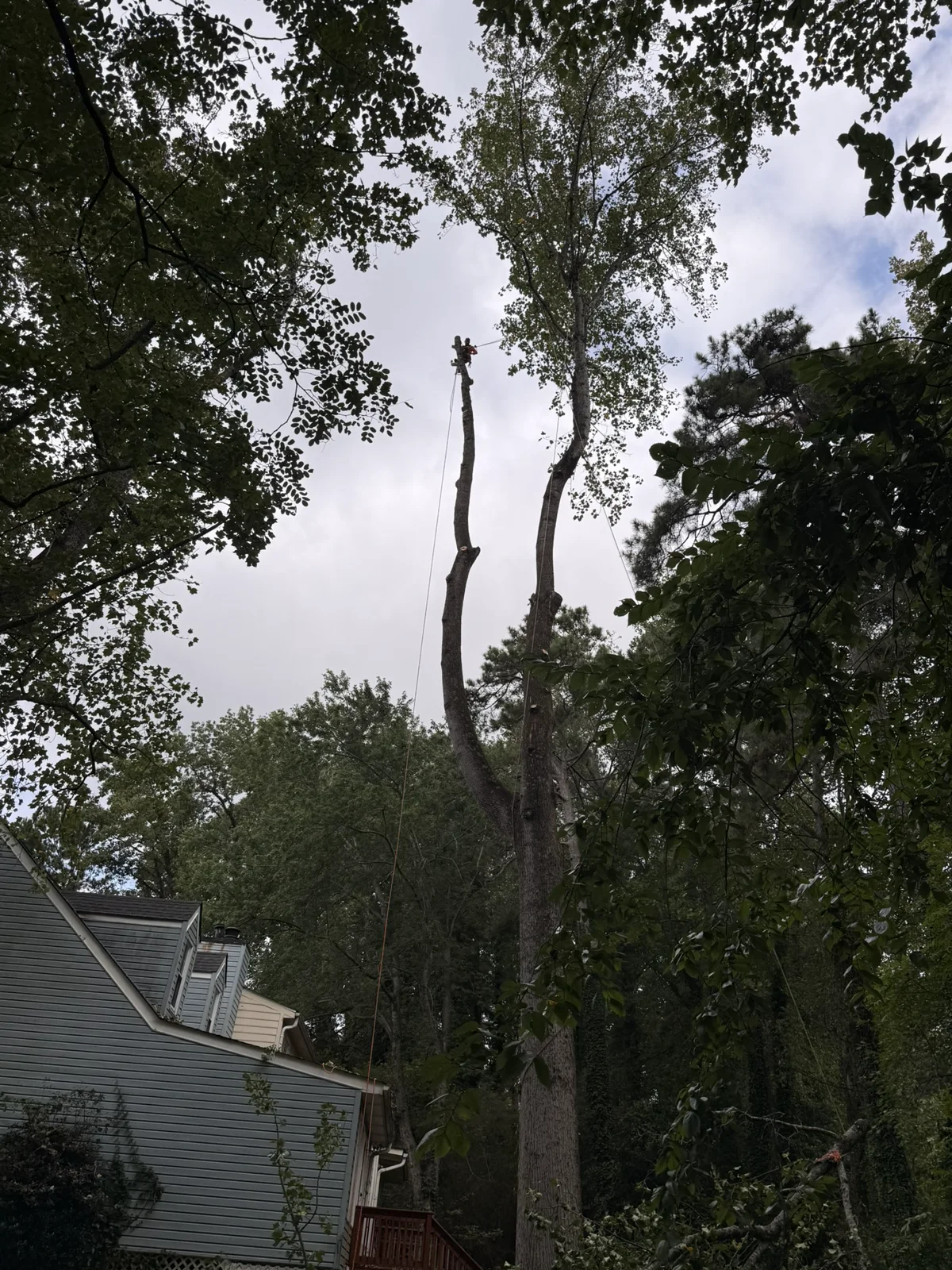
Supreme Arbor carries $2 million in Commercial General Liability Insurance.
Iruku Makanga is an individual member of the Georgia Arborist Association. Supreme Arbor has a 5.0-star Google rating.
This statement describes Supreme Arbor’s Commercial General Liability coverage. It should not be read as a representation that every possible loss is insured or that an insurer will automatically pay a third-party claim. Before signing an agreement, request current insurance documentation and verify the relevant policy information with the insurer or insurance agent. The certificate itself does not guarantee that a particular loss will be covered.
Do not assume that a quoted insurance limit is a universal Georgia legal minimum for every tree project. Homeowners should consider the proposed work, the written agreement, and any insurance requirements that apply to their particular project.
2. How to Review a Certificate of Insurance
A Certificate of Insurance, often called a COI, is a document that summarizes selected information about an insurance policy. Under Georgia regulatory standards, the certificate is informational and does not amend the underlying insurance contract. Homeowners can consult our Georgia tree service vetting guide for additional contractor-review considerations.
-
Request a current certificate
Ask the contractor for a current certificate issued by the insurer or insurance producer. Check the named insured, insurer, policy type, stated limits, and effective dates.
-
Verify information with the insurer or agent
Use contact details that you have independently confirmed. Ask whether the policy is in force for the proposed work period and whether exclusions or endorsements may affect the type of tree work being considered.
-
Understand the certificate’s limits
Being listed as a certificate holder does not, by itself, make a homeowner an additional insured or create coverage that is not in the policy. Where additional-insured status or another specific protection is required, ask the insurer or agent to identify the relevant policy wording or endorsement.
For the governing explanation, read the Georgia Insurance Commissioner’s bulletin on Certificates of Insurance and Georgia Administrative Code Rule 120-2-103.
3. What to Do if Tree Work Damages Your Property
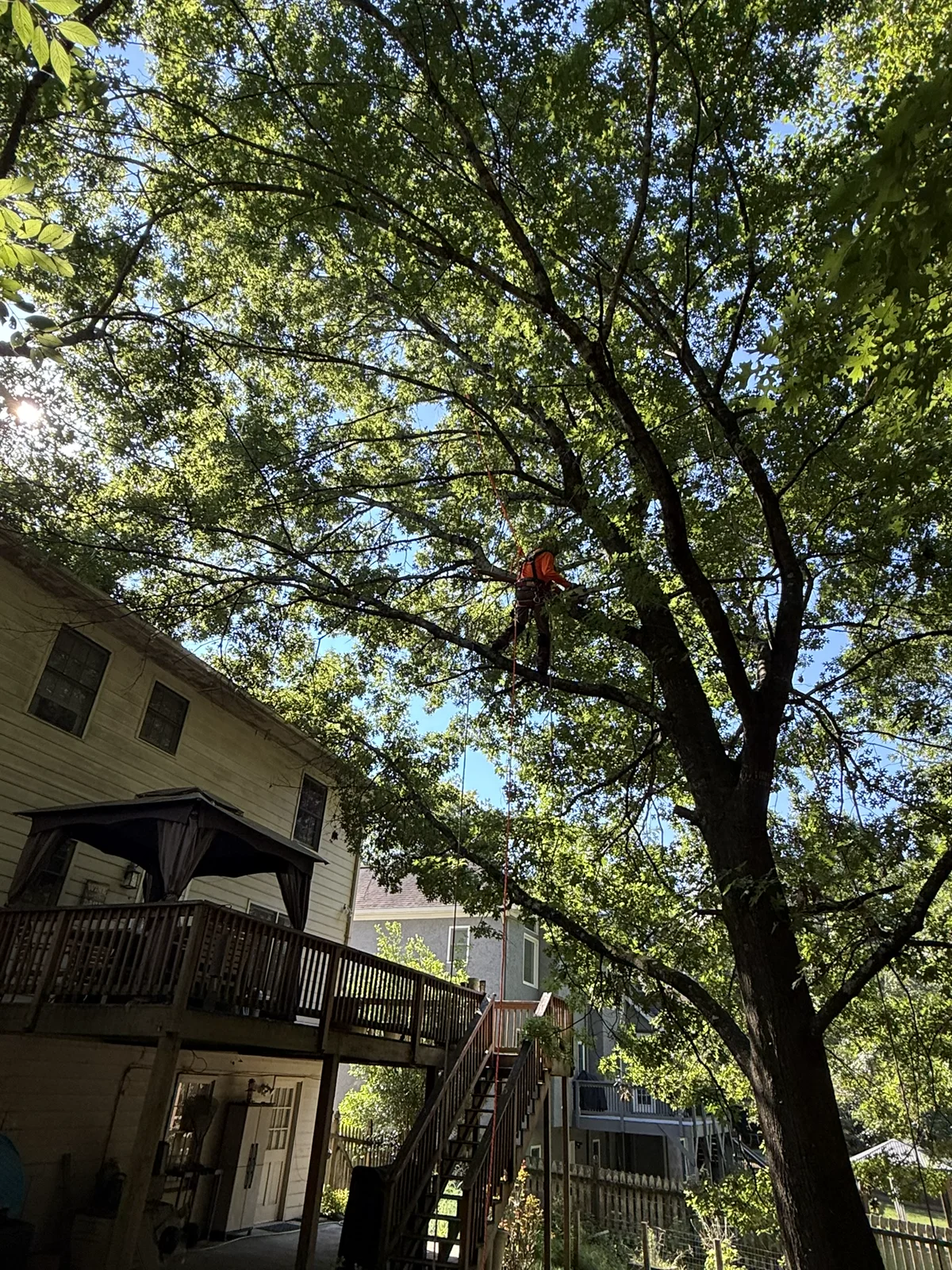
If property damage occurs during tree work, first consider personal safety. Keep people away from unstable trees, damaged structures, downed wires, and other hazards. Contact the appropriate emergency or utility service if there is an immediate danger. Preserve the project agreement and document what happened from a safe location. Responsibility for damage depends on the facts, the agreed work, applicable law, and relevant insurance policy terms.
-
Record what happened
Take dated photographs or videos from safe locations. Capture the wider area, the visible damage, and the relevant equipment or work area where it is safe to do so.
-
Keep the project records
Save the written estimate, signed agreement, invoices, messages, and any photographs taken before work began.
-
Notify the contractor in writing
Describe the damage, when it was noticed, and where it occurred. Keep a copy of the communication and any response.
-
Ask about the relevant insurance contact
You may request the contractor’s insurer or claims contact information. A contractor’s Certificate of Insurance does not itself establish that a specific loss is covered or that a claim will be accepted.
-
Contact your own insurer or legal adviser where appropriate
Ask your insurer how your policy applies to the circumstances. Before withholding payment, signing a release, or agreeing to a settlement, review the written agreement and consider getting advice from a Georgia attorney.
Responsibility for damage depends on the facts, the agreed work, applicable law, and the terms of the relevant insurance policies. For general Georgia guidance about fallen trees, overhanging branches, and boundary-line trees, see Section 4 of this guide. Avoid relying on a general online statement as a decision about a specific claim.
4. Georgia Guidance on Fallen Trees and Property Lines
Questions about a neighbor’s tree can involve different situations. A tree that has fallen onto another property, branches that extend across a boundary, and a trunk that stands on a boundary line are not the same legal question. The guidance below is general information, not a determination of responsibility in a particular dispute.
When a tree falls onto another property
The Georgia Attorney General’s Consumer Protection Division guidance on fallen trees explains that, in general, the owner of the property where a fallen tree lands is responsible for damage to that property and the cost of hauling away the tree. The guidance describes an exception where the owner of the originating tree should reasonably have known that the tree was dead or diseased. Visible signs or prior written notice may be relevant to that question.
This is general consumer guidance, not an automatic decision about every storm, property, or insurance claim. The cause of the failure, information available before the fall, the damage, and the relevant insurance policy all matter. The University of Georgia Cooperative Extension bulletin on tree ownership and responsibility provides additional background on ownership, maintenance, and negligence questions involving trees.
When branches extend over a property line
The Georgia Attorney General’s Consumer Protection Division guidance on encroaching branches explains that, in general, the person whose property is overhung is responsible for trimming branches that extend onto that property. The person doing the work, including a tree service hired for the work, must not trespass onto the neighbor’s property or damage the tree. A visibly dead or dying tree, or a tree presenting an imminent danger, may raise different responsibilities for the tree’s owner.
Before arranging work, it is sensible to discuss the issue with the neighbor, confirm the property boundary, and obtain advice where the location or scope of proposed cuts is disputed. Do not assume that general guidance about branches also authorizes cutting roots or taking action across a property line.
When a tree trunk stands on the boundary line
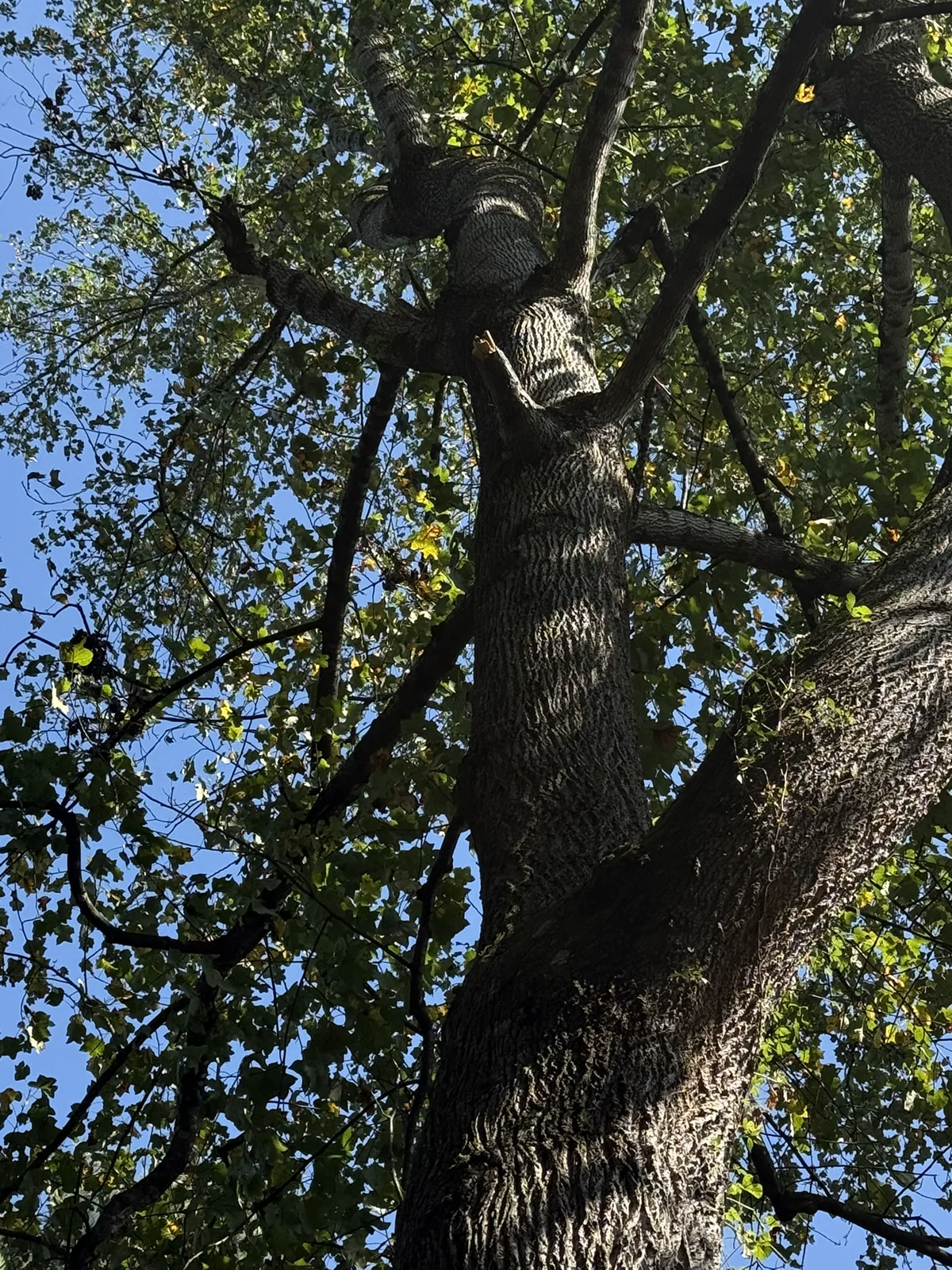
In Willis v. Maloof, 184 Ga. App. 349, 361 S.E.2d 512 (1987), the Georgia Court of Appeals considered a tree whose trunk stood on the boundary between two adjoining properties. The court explained that each adjoining owner has an interest in the portion of the trunk on that owner’s side, with an easement of support from the other side. The court also discussed the owners’ shared duty to maintain the tree and take reasonable steps to guard against hazardous conditions.
The same decision explains that liability for a defective tree depends on ordinary negligence principles, including whether the owner knew or reasonably should have known that the tree was diseased, decayed, or otherwise dangerous. The court did not impose a general duty to constantly inspect every tree for non-visible rot. The decision is fact-specific and should not be treated as a blanket rule for every storm-related tree failure.
For a specific neighbor-tree dispute, consult a Georgia property attorney. A property survey, evidence of prior notice, visible conditions, and the circumstances of the failure may all matter.
5. What to Review in a Tree-Service Agreement
Before work begins, read the written estimate or agreement and make sure it describes the project in language that both sides understand. Clear documentation prevents misunderstandings regarding pricing, equipment staging, and cleanup. Depending on the work, homeowners may want to confirm the following items:
- The contractor’s correct legal business name and contact information.
- The property address and the specific trees or work areas included.
- The agreed work, including removal, pruning, and stump grinding if included in the project.
- How wood, logs, wood chips, and other debris will be handled.
- Any specialized equipment that may be coordinated and any site-access requirements.
- The project price, payment schedule, and how changes to the agreed scope will be approved. Homeowners can review our detailed breakdown of Georgia tree removal cost and pricing factors to understand how tree height, canopy spread, and proximity to buildings influence written estimates.
- Any responsibilities relating to access, pets, private underground lines, or areas that should be avoided.
- How concerns about property damage or incomplete work should be reported.
This is a practical review list, not a statement that Georgia law requires every agreement to contain a fixed set of clauses or payment terms. The written agreement and the facts of the project determine the parties’ obligations.
6. Underground Utilities and Georgia 811
When planned work involves digging or mechanized excavation, underground utility locations must be considered before work begins. Georgia 811 explains that a locate ticket should be submitted at least three business days before digging. Wait for the required responses and markings, and check the ticket status before excavation starts. The exact legal requirements depend on the type of work and equipment being used.
Georgia 811 coordinates the marking of participating member utilities’ public facilities. It does not locate private facilities such as irrigation pipes, outdoor low-voltage lighting, invisible pet fences, or some pool and landscape systems. Those facilities may need to be identified by the property owner or located separately by a private utility locating contractor.
Read the Georgia 811 process and use its ticket-status guidance before covered digging or excavation work. Do not assume that public utility markings identify every private wire or pipe on a property.
7. Independent ISA Certified Arborist Evaluation and Reporting
Supreme Arbor does not employ a Certified Arborist. When certified evaluation or reporting is required, Supreme Arbor engages independent ISA Certified Arborists. Iruku Makanga is an individual member of the Georgia Arborist Association (GAA).
Any engagement of an independent ISA Certified Arborist is specific to a project that requires certified evaluation or reporting. Homeowners who wish to check an individual arborist’s credential can consult the ISA credential directory at TreesAreGood.org.
For additional property guides and operational insights, explore our North Georgia tree care resource center or view our local service coverage across Canton and Cumming.
Frequently Asked Questions
What insurance should a tree service company carry in Georgia?
Insurance requirements can depend on the project, written agreement, and policy. Ask the contractor for a current Certificate of Insurance and verify the relevant details with the insurer or insurance agent. A certificate is a summary and does not guarantee coverage for a particular loss. Supreme Arbor carries $2 million in Commercial General Liability Insurance.
How do I verify a tree company’s insurance before work begins?
Request a current Certificate of Insurance and review the named insured, insurer, policy type, stated limits, and effective dates. Contact the insurer or insurance agent using independently verified contact information and ask about exclusions or endorsements relevant to the proposed work. A certificate holder listing does not by itself make you an additional insured or guarantee coverage.
Does a Certificate of Insurance guarantee that property damage will be covered?
No. A Certificate of Insurance summarizes selected policy information. Under Georgia’s insurance guidance, a certificate does not amend, extend, or alter the policy. The policy wording, the facts of the incident, and the insurer’s coverage determination matter.
Will homeowners insurance pay to remove a leaning or split tree?
Do not assume that a homeowners policy will pay to remove a standing tree solely because it is leaning, split, or considered hazardous. Coverage depends on the policy and the facts, including whether covered property damage has occurred. Contact your own insurer for a coverage determination before relying on insurance to pay for removal.
Who is responsible if a neighbor’s tree falls onto my property?
The Georgia Attorney General’s Consumer Protection Division says that, in general, the owner of the property where the tree lands is responsible for the damage and removal costs. An exception may apply when the tree owner should reasonably have known the tree was dead or diseased, including from visible signs or prior written notice. The facts of the situation matter, and a Georgia attorney can advise on a specific dispute.
Can I trim branches from a neighbor’s tree that extend over my property?
Georgia Attorney General Consumer Ed says that, in general, the person whose property is overhung is responsible for trimming branches that extend onto that property. The person doing the work must not trespass onto the neighbor’s property or damage the tree. A visibly dead or dying tree or an imminent danger may create a different responsibility for the tree’s owner.
Does Supreme Arbor employ a Certified Arborist?
Supreme Arbor does not employ a Certified Arborist. When certified evaluation or reporting is required, Supreme Arbor engages independent ISA Certified Arborists.
Is a tree service company automatically liable for damage to an underground sprinkler or utility line?
Responsibility depends on the work, the agreement, the utility-location information available, and the circumstances of the damage. For covered digging or mechanized excavation, Georgia 811 says to submit a locate ticket at least three business days before digging, wait for the required responses, and check ticket status before starting. Georgia 811 coordinates participating member utilities’ public facilities. Private systems such as irrigation, outdoor low-voltage lighting, and invisible pet fences may need separate locating.
Does Supreme Arbor provide crane-assisted tree removal?
Yes. Supreme Arbor can coordinate specialized equipment when appropriate, including crane-assisted tree removal. Crane use depends on the tree, site access, surrounding structures and overall project requirements.
What can be done with the wood chips and logs?
Options include hauling away the wood and debris, leaving wood chips on the property, or cutting suitable wood for firewood. Other options include grinding the stump. Available options and any related costs will be discussed and included in the project estimate.
Sources and Further Reading
The following sources provide the public guidance and case text referenced in this article.
- Georgia Office of Commissioner of Insurance: Bulletin 23-EX-9, Certificates of Insurance
- Georgia Administrative Code: Rule 120-2-103, Certificates of Insurance
- Georgia Attorney General Consumer Ed: Neighbor’s Tree Fell on My Property
- Georgia Attorney General Consumer Ed: Trimming a Neighbor’s Tree That Encroaches on Your Property
- Willis v. Maloof, 184 Ga. App. 349, 361 S.E.2d 512 (1987) (Boundary Line Tree Ownership & Shared Maintenance)
- University of Georgia Cooperative Extension: Tree Ownership and Responsibility
- Georgia 811: The Utility Locate Process
- Georgia 811: Checking Utility Locate Responses and Ticket Status
Educational Information Disclaimer
This page provides general homeowner information. It is not legal advice, insurance advice, a coverage opinion, or a substitute for a property survey or professional evaluation. Georgia laws, local requirements, insurance policies, and individual circumstances can differ. Confirm current requirements with the relevant government office, speak with your insurer about coverage, and consult a Georgia attorney about a specific legal dispute.